A Train to Utopia: Spacetopia

Screen shot. An island floating outside the circular space. Inside the space is multiple stars and a big sun.
Spacetopia

I ran three workshops during the residency. Each of them had eight participants signed up for different occupations. I create a virtual journey ran on Hubs by Mozilla. The journey to utopia start with a train trip then traveled to several worlds to learn the idea of utopia and what other utopian did. At the end of the workshop, the participants will co-create a utopia that solved different problems in that specific world.

Screen shot. Several houses on astroid, a cat meme gif on the right, below is a pink pig. A big sun at far side and earths. A pizza floating and several gifs.
Residencial area

Spacetopia is an interesting world. There’s no gravity in space so everyone will be flying. The spacecraft broke and they stuck here. The utopians have enough food and water but they will need to decide whether to stay here or prepare to explore another world. If their team chooses to stay, they will need to build settlements, food, facilities… etc. If their team chooses to leave, they will need to split the team to work on base to repair the spacecraft and the other to explore places to build outside this galaxy.

They played both part, built a settlement and explore the outer space. Here’s what they build and what they found.

Screen shot. A camp site with bonfire and tree. In the middle is a portal to another world.
At outer space there’s a island, on top of the island is the camp site. A teleportation is there.
The future world at year 5000, the land is pink, the sky is blue with amazing gradient from dark blue to light blue accompany with neon green light, neon red light. Only one time machine on the ground. Super future like feeling!
The future world at year 5000
Screen shot. Back to the space. A volcano in the center back. A weird space dog like animal on the left. On the front is a waterfall with some green trees.
Volcano and some weird animal
Screen shot. A time travel portal like spiral tunnel in purple and black. With an orange butterfly in the middle and an ape at the further side.
A time travel black hole?
Screen shot. A weird flow at front left bottom corner. Astroids floating at back with three earths and a big sun.
Three earths
Screen shot. The big sun. It has extended rays floating in yellow and orange with some purple dots floating too.
big sun
Screen shot. Inside the earth. A shit in the middle...
inside the earth is a shit…
Screen shot. In the space some white transparent light beams in the center.
some light beams
Screen shot. A far view of the whole utopia they built. A sun, astroids, earths.
kind of bird view from distance

This Utopia is created by “A Train to Utopia” workshop participants, the name of the participants were display in the utopia tower. To access it please contact me.

A Train to Utopia: Tree House Utopia

This is a screen shot of the bird view of the Tree House Utopia.
At the center is huge trees with facilities. Looks like an island is next to it and a pirate ship.
Birds view of Tree House Utopia

I ran three workshops during the residency. Each of them had eight participants signed up for different occupations. I create a virtual journey ran on Hubs by Mozilla. The journey to utopia start with a train trip then traveled to several worlds to learn the idea of utopia and what other utopian did. At the end of the workshop, the participants will co-create a utopia that solved different problems in that specific world.

This is a screen shot. The other angle of the utopia. Several trees with connected wooden board. The utopia had some trees and natural landscape. Must be artificial.
Trees connecting by wooden boards floating on the sea.
This is a screen shot. A view of beach, pirate ship, rock-ish island.
A view from center of the island

The tree house is a classic scenario, due to climate change in the near future the water raised and flooded everywhere. People living on these giant trees.  The problem is there’s not enough food and water for all of you, you will need a clean water system, food system, laboring system and a thing that gives people hope.

Here’s the island with their approach to food system, water system, city center, recreation and landscapes.

This is a screen shot. A red and white stripe lighthouse on the tree house. A well at the edge of the wooden board.
Lighthouse on the tree house
This is a screen shot. A "G" shape working space perhaps. At the far side of the image is a restaurant like building sit on top of the tree.
A working place perhaps…
This is a screen shot. A bunch of green land with gif images. These images are sheep, chicken, pika chu and a image of chief at the far side. It looks like a farm.
Farms with sheep, chief and Pika Chu
This is a screen shot. Six TVs floating at the left part of this image, and a baseball stadium on the right with crowd cheering.
Some TV with Korean Oppa and a baseball stadium
This is a screen shot. Three red/ pink vending machine lined up on the wooden board.
vending machines
This is a screen shot. A sea park like layout. A man made landscape at middle with rocks, greens and a fox? A Orcinus orca jumping off the sea at right and two red octopus at the far side.
sea park?

This Utopia is created by “A Train to Utopia” workshop participants, the name of the participants were display in the utopia tower. To access it please contact me.

A Train to Utopia : Doge island

This is a screen shot of the utopia. An island with many flying coins and dog meme gifs. There's a bridge connect the island to somewhere. A bank in the center of the island, but a gigantic coin behind it.
Doge island

I ran three workshops during the residency. Each of them had eight participants signed up for different occupations. I create a virtual journey ran on Hubs by Mozilla. The journey to utopia start with a train trip then traveled to several worlds to learn the idea of utopia and what other utopian did. At the end of the workshop, the participants will co-create a utopia that solved different problems in that specific world.

This team on 5.28 choose the scenario: island.

This is a simple island, but the land is limited. So every decision needs to be made precisely. Since the island is so boring, you will need to create a vision that will keep people staying. Such as religious, cult, gambling… etc.

Here’s the utopia, they built an utopia with capitalized cult “doge coin”. Instead of growing their own food and water, they choose a capitalism route. The island is covered by meme gif, that sort of strengthen the cult feeling of the utopians.

This is a screen shot. The other angle of the island. You can see a middle size billboard in the center of island. Behind it is the bank and gigantic coin.
Surprised they have a billboard in the center, old school business compared to crypto.
This is the screen shot. Inside the bank on the island. There's several dog meme gif floating and part of that gigantic coin.
Inside the bank
This is the screen shot. The dog meme gif. It's a Shiba Inu with cute eyes looking at you.
The cult
This is a screen shot. From the other angle, with several red mushrooms... it's kind weird looking. Kind of have this idea of cult...
Mushrooms…
This is the screen shot. The other angle from the island to see through the bridge, you can also see a red small barn besides it. The barn is using for store food I guess... on top of the bridge is more dog meme gifs...
A bridge to somewhere and a barn to save food…

This Utopia is created by “A Train to Utopia” workshop participants, the name of the participants were display in the utopia tower. To access it please contact me.

What can subtitles do?

Screen capture on BBC Radio 4 page with title Inventions in Sound. On lower right there is a picture of Deaf poet Raymond Antrobus who has dark brown short curly hair cut and is wearing a khaki coloured jacket with mustard coloured shirt inside. At the bottom, it says Watch: Inventions in Sound - Subtitled Video along with a  small description underneath that says The poet Raymond Antrobus explores the art of translating sound for the eye, looking at the poetic possibilities of closed captions. On upper left corner it has BBC logo in white block letter in black boxes.
Screen capture from the video on BBC Radio 4: Inventions in Sound – Subtitled video with a short description that says “The poet Raymond Antrobus explores the art of translation sound for the eye, looking at the poetic possibilities of closed captions”.

I was recently told about this program by a friend as they suggested it might be relevant to my practice. As it sounded super interesting to me, I was worried that it might just be a radio recording without subtitles. But then I was happy to find that there was a subtitled video for people like me – D/deaf people and hard of hearing. My relationship to radio has been pretty much non-existent, the only time I would hear it is when the car didn’t have any interesting music to play, my mom would always turn it on for background sound.

In this 28 min-long video, the Deaf poet Raymond Antrobus talks about his experience with radio, subtitles on TV, and translating sound within the hearing world. Words on the video are constantly flickering, as though we are watching on old static TV. Simultaneously, words are spoken in a flat monotone with interviews from artists and writers in their interpreter’s voices.

Beige coloured background with a line of interview from Raymond Antrobus: "As a deaf person in the hearing world I know that there is no universal experience of sound. So how can we capture what it is? How do we turn sound into words? What is sound?". In the upper left corner it has the BBC logo in white block letter in black boxes.
Screen capture from the video on BBC radio 4 with a line of the interview from Raymond Antrobus: “As a deaf person in the hearing world I know that there is no universal experience of sound. So how can we capture what it is? How do we turn sound into words? What is sound?”

Throughout the video, commentaries are shown from Deaf artist (Christine Sun Kim) and Deaf poet (Meg Day), filmmaker (Lindsey Dryden), and caption maker (Calum Davidson), discussing what closed captions mean to them. I found this video really great as it really resonated with my experience and brought back my memories of constantly trying to find something on TV that provided subtitles. In particular, there was a reference by Lindsey Dryden to the film Dawn of the Deaf by Rob Savage. The film makes clever use of subtitles by partially showing them during a scene of a couple fighting using BSL, intentionally not showing the audience the full context of the argument. The mentioned short film can be found on Rob Savage’s website (the video is subtitled).

BBC Radio 4’s “Invention in Sound” can be found on the BBC website- the transcript is also available for download as well.

-Subtitles can easily change the context of video being shown.

-Subtitles can either tell us so much and so little.

-Size and placement of subtitles can be important as they can either hide or reveal what is happening on screen.

-How can the subtitles translate sound?

In my research posts, I would like to include questions, bullet-pointed lines of thinking, comments, and references. Please let me know if you have any questions!

During this week I am hoping to explore more into the unique language of subtitles and begin searching through film archives for more references. I wanted to ask everyone – what does sound mean to you? What is your experience with subtitles?

Body Builder

A photo of an old printed photo which is very crumpled and worn, with fold marks and a dogeared corner. The printed photo is from a front perspective and in black and white. Centre is a teenage man standing, visible from the ankles upwards. He is wearing only a pair of tight black pants, he is posing in a bodybuilder stance, with his fingers hooked together and his arms turned outwards, to show the extent of his arm muscles, his skin is slightly shiny as though it has been oiled. His head is tipped upwards and he looks off into the distance. He has a fluffy dark head of hair in a messy quiff style. He looks calm and confident.
Ray Jones, circa 1964, 14 years old

Ray Jones, born 1950 on a council estate in Derby, a saxophonist, a freemason, an enthusiast of obscure experimental films and a collector of strange art prints, a Body Builder, a statue frozen in time, a mystery.

My deceased Dad, who died of a heart attack when I was almost 3 years old, is where I think I can mark my first awareness of hyperable bodies. They’d lift weights together my Mum told me, they’d run up and down the flights of stairs in their highrise apartment building my Mum told me. I still have a couple of his gym tops she gave me.

Interview with resident artist Laura Lulika

Jamie Wyld (Vital Capacities’ director): Thanks for being part of the Vital Capacities residency programme! Can you say a little about yourself and your work, perhaps in relation to what you’re thinking about doing during the residency?

Thanks for inviting me. I am a sick and disabled artist, researcher and community cultural worker. My practice challenges the preconceptions of what it is to be sick and disabled. It acts as a reminder that sick and disabled bodies are actively political even in states of what might look like physical inactivity to someone who is able. In reality, ‘resting’ isn’t really rest if you don’t have a choice.

Continue reading “Interview with resident artist Laura Lulika”

Studio intro

A photograph of a monitor between two curtains. The monitor is positioned in the centre of the image on a brown block in front of a window with bars on it. On the monitor’s screen is a close-up of a blonde woman. Two white curtains are positioned either side of the monitor. The wall behind the two curtains is pink. In the centre top of the image are silver balloons which spell out the words ‘STAY SICK’.
Laura Lulika, An Ode to Marge (or how i taught myself to speak again by watching the real housewives), 2018 (installation photo) Image courtesy of the artist. Credit: Judy Landkammer

Hi, I’m Laura Lulika, thanks for stopping by at my virtual studio. I’m an artist, researcher and community cultural worker with a focus on unconventional care methods and community support networks. I am interested in how we experience our bodies and how we care for ourselves and each other.

I have spent most of my time recently delivering workshops and talks on care and accessibility, working with the collective and peer support group, Sickness Affinity Group, and being a new parent.

This residency has given me the timely opportunity to return to my own personal practice and reflect on interests and curiosities that I have yet to explore. In my own experience of being housebound, which started long before the pandemic, I became interested in the culture we

consume in isolation and how that impacts our sense of self. During this residency I am going to dissect the cultural fascination with ‘hyper-able’ bodies, in sports, cartoons and popular culture. The obsession with body limits is simultaneously jarring and relatable to my personal experiences of having an unreliable body. Sick and disabled bodies are commonly perceived as ‘unhealthy’, something to be cured rather than cared for.

And at the same time, we are often pushed to perform feats of ability to be deemed worthy by capitalism. I have gently titled this project, ‘Body Builder’, in reference to my deceased Dad who was a body builder and where I think I can mark the beginning of my own awareness of hyper-able bodies.

This research will inform some playful explorations into how I have consumed, digested, absorbed, adopted or rejected these performative tropes and characteristics.

Please feel free to look around the studio and leave comments and questions in the comments section if you want to.

Hope you find something that speaks to you,

Laura Lulika

Studio intro

A collage of green leaves, white daisies with yellow centres, and stripes of yellow and red streak across the image.
Linda Stupart, Watershed, 2020 (video still) – image courtesy of the artist

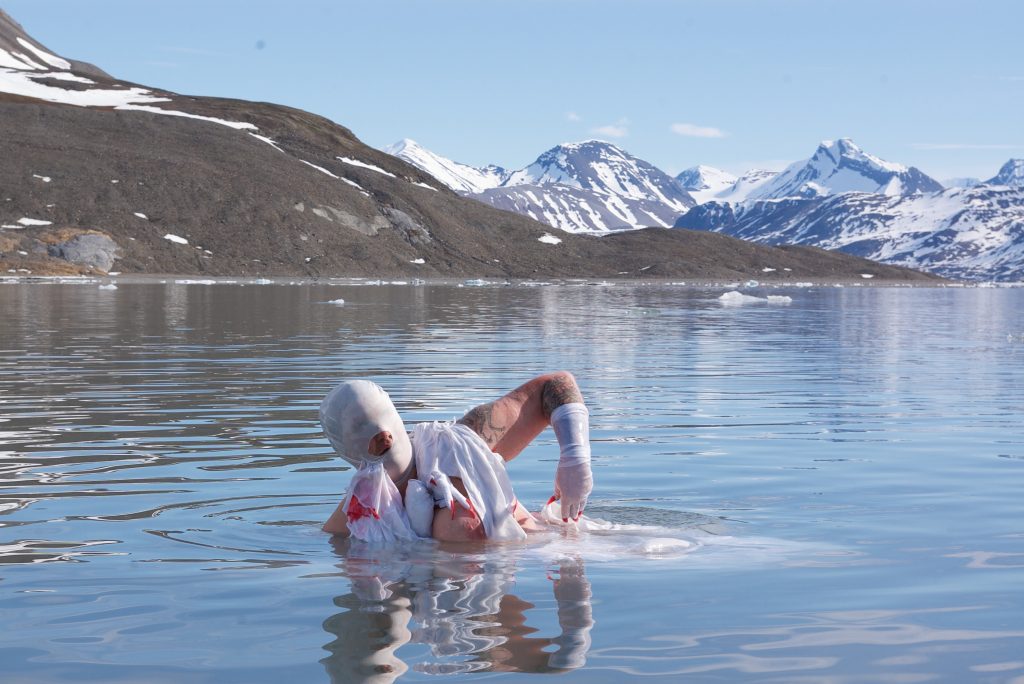
Two Summers ago, I went on a boat to the Arctic Circle and swam in the sea and crawled through the ice as a virus and an alien and myself. It was very cold and intense, but I finally felt close, really close, to the melting polar Ice Caps.

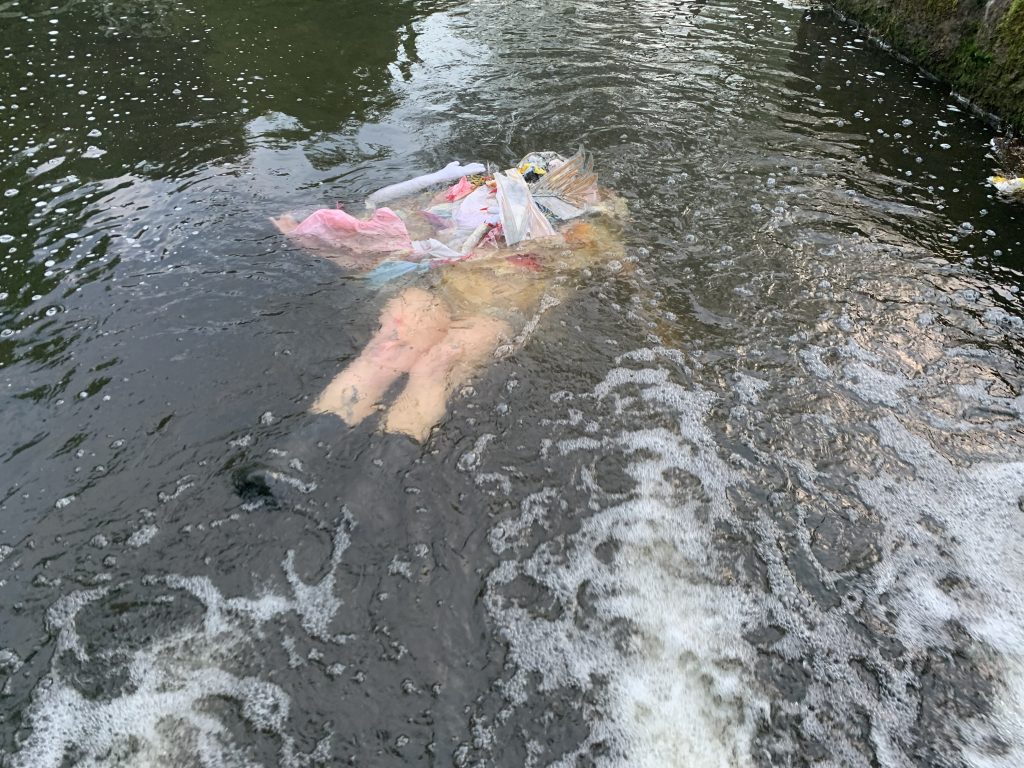
2020 Summer and the virus was suddenly something really tangible and terrifying for everyone in the world. We were stuck inside, but were allowed to take a daily walk. I wanted to carry on thinking about ecologies and nature and bodies and intimacy, so I decided to get into the River Cole – a river in Birmingham that runs really near my house. Because it’s in Birmingham, the river is dirty and full of the run-off of people’s lives and this felt/feels important. So, I started the process of walking down it.

In the last year I have done five walks down the river, moving further towards the mouth each time.  In this residency I hope to do a lot more walks, getting further away from my home and deeper into the river. I want to also spend time editing, writing, and collaging with the footage of walks I have shot since I made this film in 2020. In the Arctic we didn’t have any access to the internet. Now, cyberspace has become one of the only places we can be together and it’s been both horrible and warm – the way that everything is connected online – like root systems or rivers, even though a lot of the internet (like root systems or rivers) is rotten.

It’s good to reside here for a month and work inside this ecology, too. Look around and get in touch using comments if you’d like.

Studio intro

A black rectangular lightbox with a white screen has the word what with a question mark written 3 times on it, black pipes leave the box on the left and right sides.
Seo Hye Lee, What Did You Say?, 2017 (audio-visual installation)

Hi, my name is Seo Hye Lee (pronoun: She/Her). Welcome to my studio! 

I am a Somerset-based South Korean artist. I consider myself to be an artist that works with mediums of sound, illustration, and installation. I like to explore the nature of sound as a deaf individual in different ways.

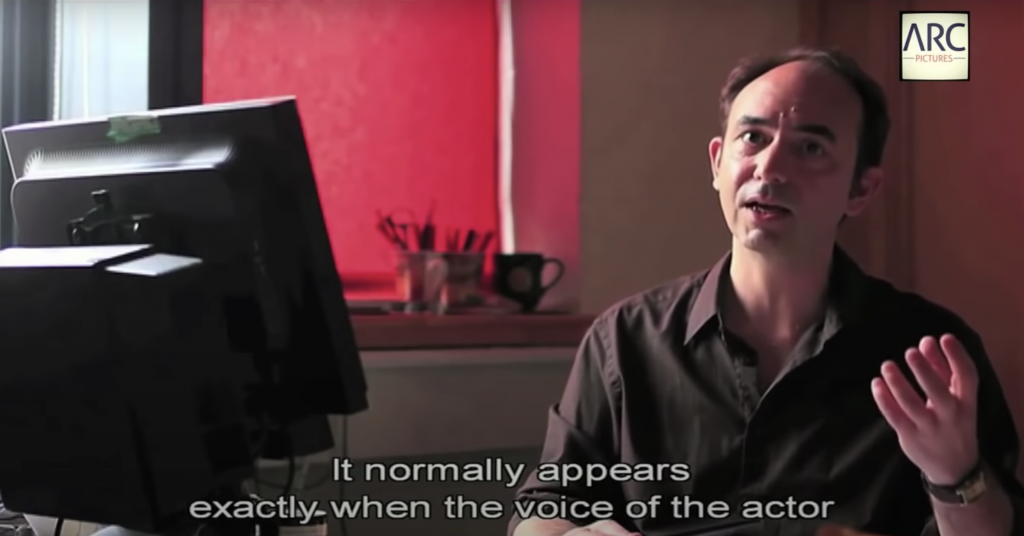
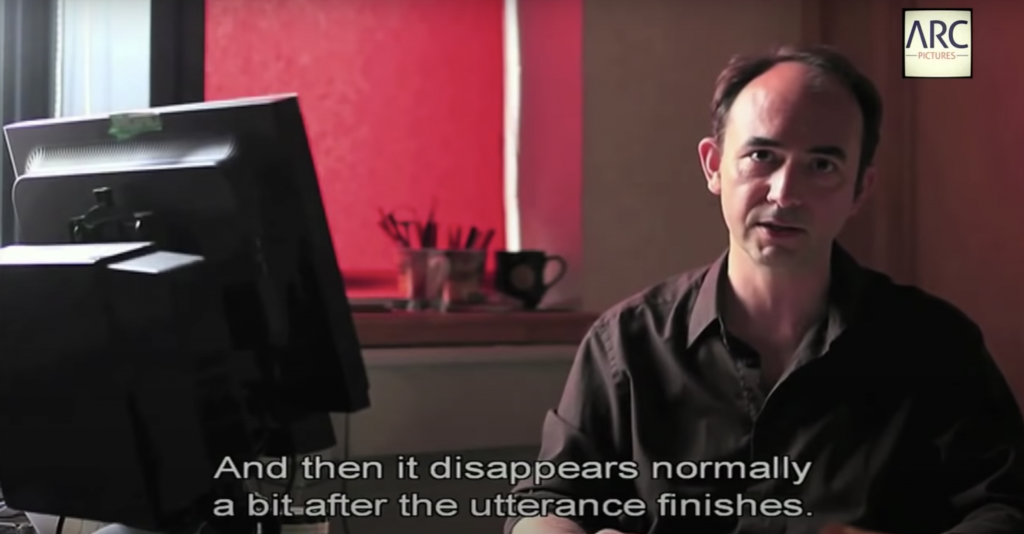
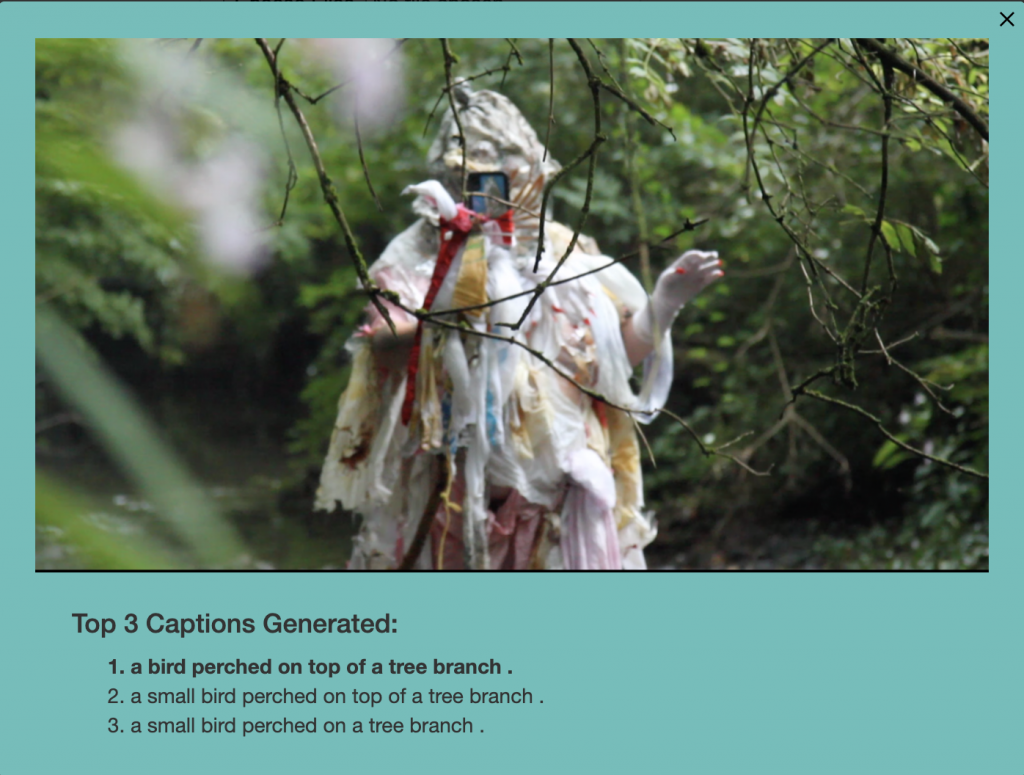
As someone who has frequently worked with audio-visual installation, I would like to push my practice toward creating works within the video installation and moving image format. Due to my deafness, I grew up relying on subtitles in film and media. I have since become interested in subtitles as a nuanced form of communication. This residency will provide a fantastic opportunity for me to explore this in greater depth and allow me to experiment with the context of subtitles more boldly, particularly engaging with other artists and researching in depth. For this residency, I will be experimenting with the language of subtitle, and the inaccuracy of auto-generated captions and transcriptions through the medium of video projection.

I hope you will enjoy the documentation of my process and research in my virtual studio and please feel free to ask me any questions or leave comments! 

Interview with resident artist Seo Hye Lee

Jamie Wyld (Vital Capacities’ Director): Thanks for being part of the Vital Capacities residency programme! Can you say a little about yourself and your work, perhaps in relation to what you’re thinking about doing during the residency?

My name is Seo Hye Lee and I use the pronouns of she/her. I am a South Korean artist based in Somerset, UK. My practice revolves around the use of illustration, sound and installation – I like to explore the nature of sound and, in particular, the boundaries between listening and hearing. I frequently use my experience as a deaf person with a cochlear implant as a starting point to create my works. Being both a hearing and a deaf person has provided me valuable insight into accessibility in daily life and it has motivated me to challenge the notion of listening.

Continue reading “Interview with resident artist Seo Hye Lee”

04 ಕಥೆ Kathe (Story) / Dematerialise

a pixelated form of a hand is in the foreground in bright yellow and orange. It is set against a grey checkered background and to its left are an assortment of individual pixels in bright red. Tinges of blue appear throughout the image.
Image still from Dematerialise by Vishal Kumaraswamy

As an artist working with experimental technologies, hacking/re-purposing tools to create artistic works I’m often looking for ways in which I can create intimate shared experiences. Even before the pandemic, a lot of my practice was being conducted solely through computer based interactions due to a lack of funding and other resources. This mode of working allowed me to focus my practice towards making accessible works and I began thinking about the language, technology and context accessibility of my works within a larger contemporary art conversation.

Continue reading “04 ಕಥೆ Kathe (Story) / Dematerialise”

Tender Crafts

A search for aesthetical methodologies that problematize how history is written and traditions are represented continues to drive my practice. My work evolves through re-defining, re-contextualising and experimenting with affectual discourses and a constant engagement with questions exploring what tradition is, whom it belongs to and how it can be reclaimed by those marginalised within it. In the past two years I have been developing a notion of ‘tender crafts’, which is exploring how crafts (and tradition) can be revisited and re-imagined from contemporary feminist, queer and diasporic (migrant) perspectives.

Through my new moving image work that I am researching during the residency I would like to explore folklore’s capacity to move through political vulnerabilities and its potential to foster new forms of kinship, affective communities, intimacy and care. With this in mind I would put an emphasis on customs and traditions that have transgressive, protective and healing purposes.

Costumes and masks (made in collaboration with a costume designer) based on traditional garments will play an important part of the choreography and visual structure of the work. As furtherance of their role in folk traditions the costumes will function as storytelling vehicles, shaped by the intersection of collective memories, personal histories and socio-political visual codes.

A Train To Utopia

A picture of workshop "A train to utopia". It's a color image with a train in middle, background with colorful islands, land, house, settlements, with golden text "A train to utopia".

If Utopia does not exist, can we still get there? Some say it’s just an idea, we can adapt it to our thinking. Some believe it’s in the future. Some Japanese comic picture reincarnate to an unknown world. I am your train conductor. All Aboard! 

*This is a workshop to give the idea of the history of utopia and how to adapt the utopia thinking. The train won’t wait, please be on time.

All passengers must RSVP aboard: https://forms.gle/CStAWQRpNVNbz4Gh7

Trip time: approx. 1hr

Conductor: Tzu-Huan Lin

Passenger: 24 Utopians

Three trains are running, pick your slot below. Each train only has 8 seats.

Train Options:

5/28 11:00am US, 4:00pm UK, 7:30pm India, 11:00pm Taiwan

5/29 11:00am US, 4:00pm UK, 7:30pm India, 11:00pm Taiwan

5/31 11:00am US, 4:00pm UK, 7:30pm India, 11:00pm Taiwan

*Please note you will need your computer and it needs to be a not bad one.

Get your tickets before it’s too late.

06 An interview with Wayne Liu about his experience about city, his old negatives as utopia and creek.

This is the second episode of a series interview with my immigrant friends. Each of each contains different content but in the meantime similar in a way. The total run time of each video is around an hour. Feel free to treat it as a podcast or background music and discover the surprise moment in it.

https://www.youtube.com/watch?v=_LdRlcPcKoI

There was a part Wayne talked about Utopia, to be precise, what is Utopia. He sort of thinks it through during the interview about the definition of it. He said: “Imagine something beyond reach, a critic of presence lack of whatever.” Utopia is something that can’t be materialized. When the paradox of the meaning appeared in his mind, it confused him for a bit then shortly he realized that is exactly what utopia means. The moment or that part perfectly presents the idea of utopia. Also, he talked about his idea about immigrants, which is complicated. That tells it all… I couldn’t quote what he said individually, it’s like extracting a single drip from a stream. But if look it as a whole thing it becomes a surface that can be clear sometimes, reflective things and some moist illusion. You can see the fish and the world under it but you won’t feel the chill until you jump in it.

03 your dataset won’t let me thrive / your dataset must die

‘your dataset won’t let me thrive / your dataset must die’ are a pair of video essays that seek to counter the mythologies surrounding Artificial Intelligence datasets & algorithms They are carried out as a comparative study of the works of the Black Beat Poet Bob Kaufman and the Kannada Dalit poet Siddalingaiah whose words (translation) are input into the text based neural network GPT-2.  The visual aesthetics of the work are drawn from generative AI imagery of brown faces, creative programming as well as animated representation of the words of each poet alongside text generated by the algorithm. The inability of the algorithm to generate text drawn from sufficient references to Black & Bahujan lived experiences reveal the encoded biases within the dataset and trace their origins to harmful mythologies of Caste & Race.

The works were commissioned by the Mozilla Foundation as part of the Reclaiming AI Futures project for the AI Observatory (https://ai-observatory.in/)

The image is a screengrab from the video 'your dataset won't let me thrive' and contains text laid against a black background with some generative abstract imagery. The text reads 'Abomunists Join Nothing But Their Hands or Legs, or Other Same'
Screengrab from ‘your dataset won’t let me thrive’

The image is a screengrab from the video 'your dataset must die' and contains abstract imagery of an AI generated face set against a dark blue background'
Screengrab from ‘your dataset must die’

02 Subaltern Futurism

Over the last two years, I’ve been developing a theoretical and critical framework titled ‘Subaltern Futurism’. Subaltern Futurism is envisioned as a speculative resource framework for artistic research, practice and the technological education of marginalised. Drawing from anti-caste literature, critical race theory, bahujan solidarity practices among other guiding experiences, it asks if artistic practice can become pedagogical tools to communities that are excluded from regular access to critical discourse around contemporary art & technology. The framework views technology through a sociological lens, as a fundamental right and shared resource. It expands upon Gramsci’s post-colonial notion of the Subaltern as ‘colonial populations who are excluded from the hierarchy of power’ to include the current state of digital colonisation, the shared sites for the digital commons and sections of technology users rendered ‘subaltern’ due to the capitalist pursuit of efficiency. Subaltern Futurism speculates that developing empathic relationships with technology through a range of critical & pragmatic actions can assist in the imagination of radical futures that are diverse, inclusive and conducted from multiple geographies especially arising from the global south and from contexts outside of euro-centric biases of inquiry. By considering a very wide scope at the outset, it is envisioned as a multi-year generative project occurring as various modular forms and widely disseminated within the ethos of open access.

Continue reading “02 Subaltern Futurism”

05 Creating Utopia with Church bell, plaza, latitude, forest and wolf from Daniela Stubbs-Leví

This is a series interview with my immigrant friends. Each of each contains different content but in the meantime similar in a way. The total run time of each video is around an hour. Feel free to treat it as a podcast or background music and discover the surprise moment in it.

https://www.youtube.com/watch?v=yVcn5FFTP5Q

Daniela Stubbs-Levi is a Peruvian artist, poet, and musician based in New York City. She received her BA in Graphic Arts from Toulouse Lautrec in Lima Peru, and later a BFA in Visual Arts from the University Paris VIII in France. Stubbs-Leví was born in Berlin, raised in Lima, studied in Paris, and currently lives in New York. Her sense of displacement informs her work and leads her to embrace and delve into the relativism implied in the act of remembering: memory is not a fixed device but more likely an ever-changing frame with which we measure reality. She is interested in dissecting music as sound — a pivot balancing between language and meaning— and notations for their use in different contexts that explore the nature of time and its connection to emotion. She uses mediums such as video, photography, sound, drawing, and writing as individual voices that coexist giving each one space for dialogue.

https://danielastubbslevi.com/

During the interview, she mentioned something that’s haunted my mind. She mentioned Anne Carson’s lecture about stillness which talks about immigrants as a quote because we are the quote without context. Anne Carson references the Antigone by Sophocles, how Antigone was put in the dark cave(Tomb) and became a metic that changes her status to be an immigrant, someone in between. Antigone was pulled out of the status neither alive nor dead, she was foreign to both of them. Giorgio Agamben also said, “to cite is to pull it out of the customary meaning but refused to let it settle to the new meaning”.

I like how Daniela introduced what she did was finding or be something in between. I had a friend like that too, who’s no long in U.S. but that had me thought about the feeling of hesitation and how powerful it could be.

In my research I was looking into lies, something not real nor fake, because all the lie you told was already in the memory and they might become real during the time it was told. Talk with Daniela remind me of different aspect of my lies, but to put them back into the context of my creation will erase the unsubstituted status. In that sense, I am the King Creon and I let my project or my immigrant status dry as Antigone at the cave. I quote it all the time because I couldn’t think it through…

Many thanks.