Background Context and Digressions

I’m very interested to look at ways in which our mortality and ‘immortality’ are digitally archived on online platforms. With the continuous rise of ‘technological innovation’ as an ideology and figures like Musk who justify Earth’s colonisation of Mars as a means to ‘archive human consciousness’ if the humanity is ever wiped out, this raises important points of discussion as to the lengths ‘innovation’ will go. When looking at past historical events, such as the destruction of The Great Library of Alexandria, which was the largest library of the Ancient World, we will never know what we have gained or lost, yet humanity has always been able to continue despite the ‘loss’ of knowledge we never knew.

Taking a decolonial approach to Western standards of ‘archiving’ which seeks to constantly preserve knowledge past our own death, I propose to look at the archival of our own deaths, particularly on digital platforms. Oxford researchers believe that by the end of this century, Facebook will have 4.9 billion ‘dead users’ on its platform (if it still exists).

For myself, I struggle in thinking whether it’s ‘okay’ for extensions of ourselves to digitally live on while our body, mind, and soul have transcended somewhere else? With the death tech market exponentially growing due to the pandemic, I also fear this will open up a pandora’s box that we aren’t equipped for…

Studio Intro

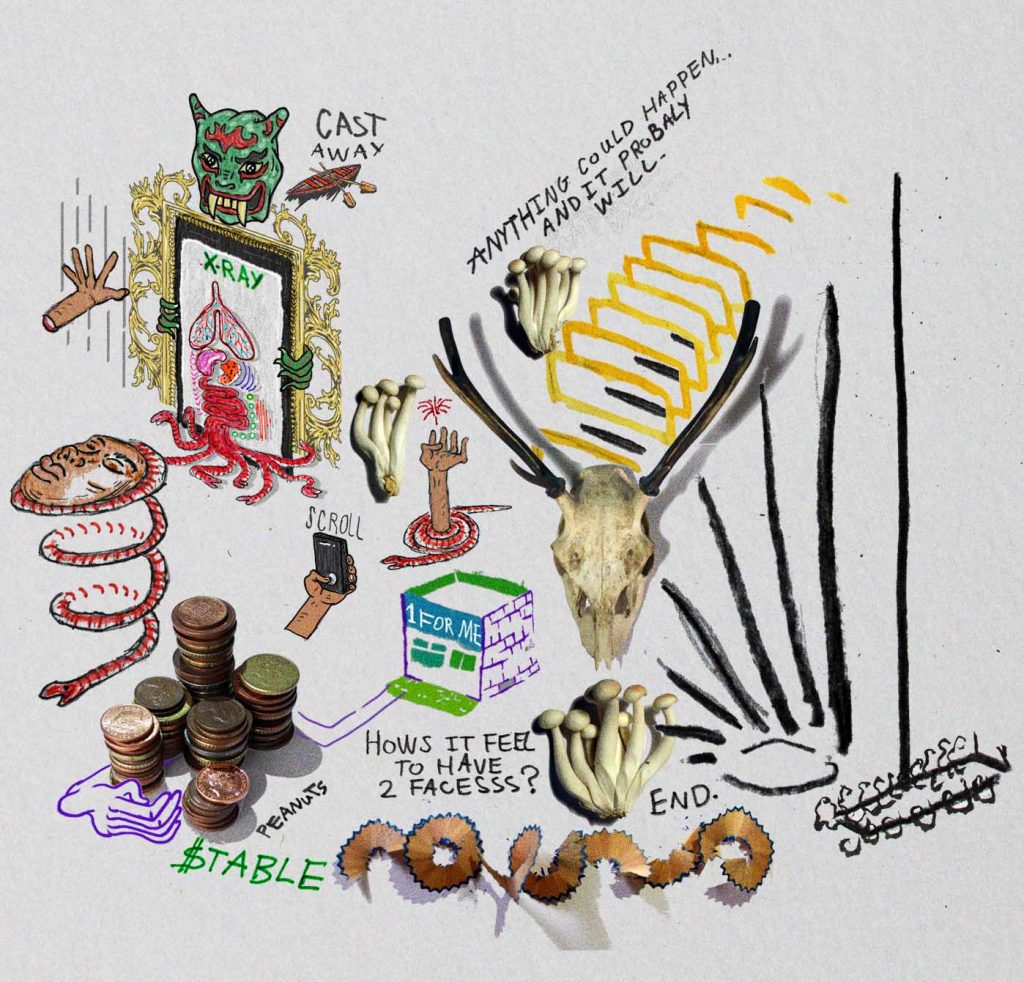
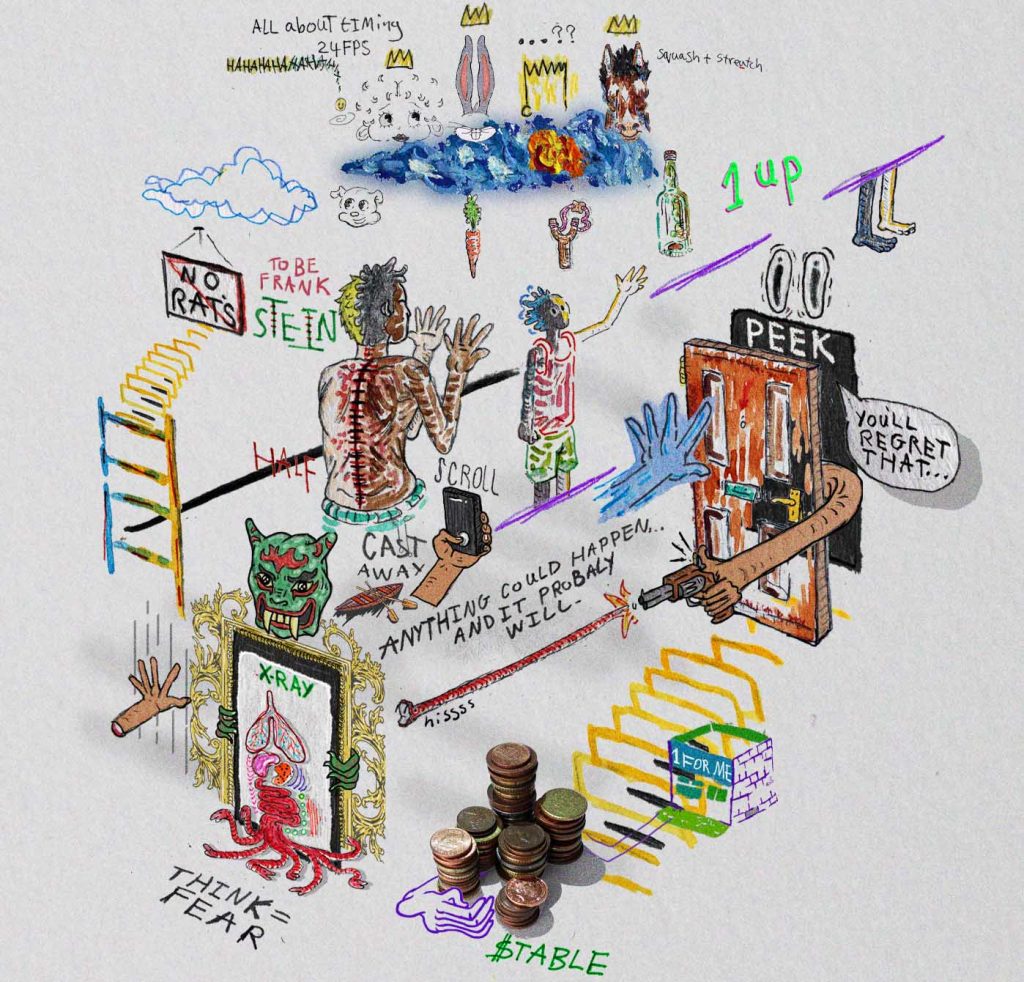
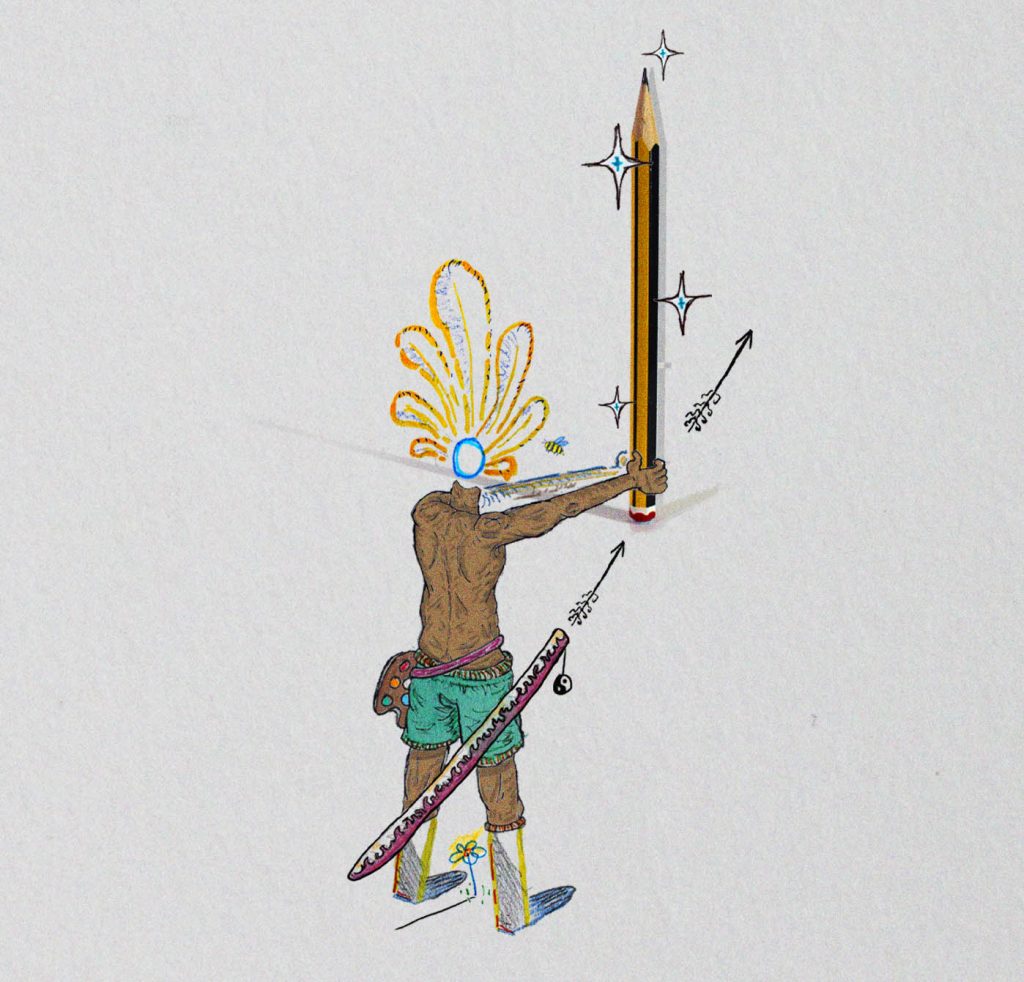
Hello and welcome to my studio. I dabble with different mediums – filmmaking, research, visual art, and social politics.

As a child of the internet, I’ve always been fascinated with who and what we are becoming through it. An idea I’ve been exploring is the human fascination of archiving and digital death (or ‘immortality’). Maybe it’s paradoxical that this will remain within its own ‘digital archive’, but I’m not aiming to provide an absolute answer. Through meta observations, I’ll look at how technology controls and negotiates the ‘display’ of one’s death (as we are merely curating that ‘archive’), and how this power affects traditional practices and emotions. Perhaps this is also a way of confronting a topic I’ve always been afraid of.

Please feel welcome to look around my studio and the work I’ve posted up – there are images, videos and text.

Hope you enjoy your visit

x

Artist Christine Sun Kim Rewrites Closed Captions

Berlin-based artist Christine Sun Kim thinks about closed captions a lot. And she let us in on a not-so-well-kept secret: they suck. Christine shows us what closed captions could be, in a new story featuring original footage she captured and captioned herself.

Video description and transcript are available.

Further information and full credits are in the description of the original post, published by Pop-Up Magazine on their YouTube channel.

Activating Captions

Curated by artist Christine Sun Kim and ARGOS director Niels Van Tomme, “Activating Captions” is an online platform that critically engages with captioning as a singular artistic form of expression. The process of converting audio and visual material into text through a display system is essential – the curators note – ‘for the Deaf and Hard-of-Hearing, as well as numerous others, such as people who are learning a new language’. There is an online magazine featuring texts from art writers, scholars, and poets that reflect on captioning from personal perspectives and experiences.

A gem that may go unnoticed on the online platform is the Accessibility Resources index. Among the links, there is “Alt-Text As Poetry Workbooks” by Shannon Finnegan and Bojana Coklyat – I will do those exercises again!

Infinite Ear: A Reader

On the occasion of the exhibition WITHIN / Infinite Ear, Bergen Assembly, 2016 Emma McCormick-Goodhart in collaboration with Grégory Castéra selected a series of texts and published a reader that follows these categories:

GESTURE/ASSEMBLY

MECHANISM/APPARATUS

UNSOUND/(IM)PERCEPTION

PROSTHESIS/DEVICE

INTERARTICULATION

ARCHITECTURE/ACOUSTICS

MIND’S EAR

MATTER/NOISE

TACTILITY

PARA-HEARING/IMAGINARY

INTRO

Thank you for entering my studio! My name is Saverio, I am an artist, and I hope you feel welcome here.

Untitled Queen described the accessibility features of the Untitled (World) show as “cool and sexy.” Those words echoed many ideas I was building while thinking of art as an inclusive practice. I am looking at accessibility features as a creative material to produce artworks and artistic experiences. I cannot follow speeches without captions, and I was used to frustrating myself with my language barriers; now, I feel those events are boring and mostly annoying.
I want to work to make cool and sexy art. I am approaching the idea of multi-sensorial artistic experiences, offering more than one access point. Traditional categories in art often refer to the sensory information they offer; I am blending several media to create shared experiences that hopefully will not feel exclusive.

I spent most of the last two years working with collective projects, and this residency will allow me to return to my practice. I am dissecting a common ableist stereotype: able-bodied folks often believe that disabled-bodied folks must have developed some hyper-sensing to compensate and be equally productive in a capitalistic society. What if my hearing loss became a hyper-sight? Or a hyper-smell? What are my superpowers? And yours?

Please leave your comments and questions around,
I will be happy to connect with you!

Hugs,
Saverio

Studio Intro

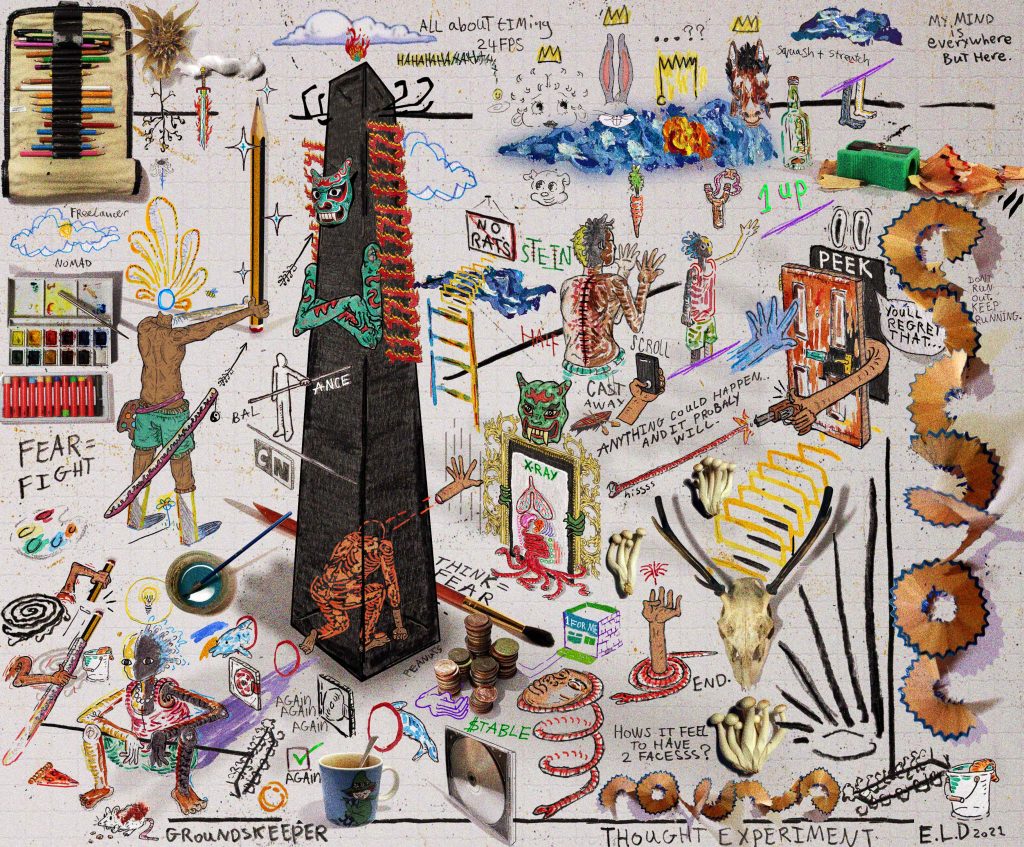
Illustration of Ellis drawing as a child. Mixed media artwork with elements of photography, pencil and digital drawing.
Artist- Ellis Lewis-Dragstra

Hi I’m Ellis Lewis-Dragstra, full time freelance illustration artist. The main commission work I get is creating album artworks for various musicians. Despite not always being aware of it, In my work I am interested in exploring the relations between art forms. Especially music, having synaesthesia music has always also felt like a visual artform to me, and possible a bigger influence on my work then actual visual artforms. I am entirety self-taught and feel this has led me to pick up a lot of “bad” drawing habits which have developed into my own style. 
In my own personal work, I try and embrace the freedom of not having any brief and create something over a few weeks/months that means a lot to me. Examples of past projects have been influenced by themes of Family, Nature, Dreams and the process of creating itself. No matter the theme I like to find connections between things that people don’t usually consider but can relate to. Being an artist that works by hand with mediums like watercolour/paint but also digital illustration on photoshop, I notice there is sometimes a hierarchy of paintings being put above digital art. I try and fight this notion of “high” and “low” art by mixing both together in my work. Therefore my influences can come from everything from the artist Bosch to the old Looney Tunes cartoons and everything in between. With this range of influences, I have always felt creating art was a balancing act between my inner child (the artist) and my adult side (the editor), who cuts out what’s unnecessary giving an artwork more direction and intention. This process can be a visual conversation or argument. What I love about art, that I try and embrace in my own work is that it has as many meanings as there are people looking at it. Please feel free to look around my studio where my creative process will be updated stage by stage resulting in a new piece of work. Thank you! 

Art Space Designation + Digital Preservation

Thinking about the in-game recreation of the Ma Tau Kok Towngas Center as an architectural piece of defunct, publicly necessary, but privately-owned infrastructure made me consider the Cattle Depot Artist Village next door. The cattle depot is a pre-war slaughterhouse turned heritage site, turned art space – a strange series of designations that I imagine reflect the needs and desires of the inhabitants of the neighborhood as well as those managing it. Sometimes at Cattle Depot Artist Village it becomes apparent the softness of art spaces is their greatest asset. The art space wraps around and slips between the overtly functional slaughterhouse architecture of the heritage site (which they are not permitted to make alterations to), making the most of the situation. This then begs the question, can multiple designations of a heritage site provide a plethora of interactions, leading to a more robust case for its preservation? Does art’s concern with history mean art spaces are well-positioned to become protectors of heritage? In the case of Ma Tau Kok Towngas Center, there is precedence, a quick Google search reveals several other formerly defunct gasometers repurposed as art spaces: Gasworks in London, as well as Gasometer Peorzheim and Gasometer Oberhausen in Germany. Tank Shanghai also has a similar story.

The Leave Your Body Minecraft map already contains a recreation of the entire Cattle Depot Artist Village. Metaphysically interpreting an artifact into data allows it to transcend time and space; to be called upon a screen from anywhere at any time – as a ghost, it becomes fluid and flexible. In the last two decades, there has been a remarkable concerted effort towards creating digital preservation archives of the world’s most significant and at-risk cultural heritage. The impulse toward digital preservation includes a desire to record an artifact in its current state, implying doubt that the artifact will remain as it is. Digitization also suggests distrust in the very material from which it is constructed. Within the act of preservation there is a sense of precarity as if in the face of inevitable and irreversible change.

Digitizing The Gasometer

The Towngas Ma Tau Kok Control Center has been recreated within the Leave Your Body world. Its worth mentioning that this was built with the help of a very talented Minecraft Architect, and consist of the exterior only – but wow is it beautiful.

A site recreated within the aesthetics of Minecraft is similar to how most 3D scanning and digitization projects – the information extracted is for “skins” and “shapes” and how these two types of information interlink with each other. The material of the site cannot be calibrated, and the material of the project becomes the medium in which the information is expressed – light emitted from a glass surface.

AUGMENTED REALITY AND DARKROOM PRINTING

I am interested exploring darkroom printing with AR. Furthering on my work from the other week I’ve carried on exploring Anna Atkins cyanotype printed and edited them to create into an AR artwork.

Anna Atkins cyanotype print which has a blue background and white outline of leaves on top.
Anna Atkins cyanotype print which has a blue background and white outline of a plant on top
Anna Atkins cyanotype print which has a blue background and white outline of a leaf on top
Anna Atkins cyanotype print which has a blue background and white outline of a plant on top
Anna Atkins cyanotype print which has a blue background and white outline of 3 fern leaves on top
Anna Atkins cyanotype print which has a blue background and white outline of 9 ferns on top.
“Anna Atkins, Ferns. Specimen of Cyanotype, 1840s, cyanotype, overall: 26.3 x 20.8 cm (10 3/8 x 8 3/16 in.), R. K. Mellon Family Foundation, 2007.15.1”

Vectary

Scan the QR codes to see further AR works.

QR code
QR code
QR code
One of Anna Atkins leaves created in Adobe Illustrator and Vectary with the Anna Atkins print used as a material. Photograph taken over rhubarb leaves.
One of Anna Atkins leaves created in Adobe Illustrator and Vectary with the Anna Atkins print used as a material. Photo is of the leaf placed over grass with a fence and a dog in the background.
One of Anna Atkins leaves created in Adobe Illustrator and Vectary with the Anna Atkins print used as a material. Photo is of the leaf placed in a bed of dying tulips.
One of Anna Atkins leaves created in Adobe Illustrator and Vectary with the Anna Atkins print used as a material. Photo is of the leaf placed in a bed of little blue flowers.
One of Anna Atkins leaves created in Adobe Illustrator and Vectary with the Anna Atkins print used as a material. Photo is of the leaf placed in a rose bush with one tiny yellow rose that is currently growing.
Adobe Aero

Scan the QR codes to open your Adobe Aero app to see further works.
QR code
QR code
QR code
QR code
QR code
A cut out of an Anna Atkins cyanotype that is floating in the air with a garden behind it. If you click on the link it will take you to footage on YouTube of me walking around the work.
Photo of one of the Adobe Illustrator works with a garden behind and a dog in the distance.
Anna Atkins cyanotype that I've edited in Adobe Illustrator is sitting on grass with a garden behind it. If you click on the link it will take you to footage on YouTube where the work in bouncing.
Anna Atkins cyanotype that I've edited in Adobe Illustrator and now in Vectary with the print of the outline of the plant as a material. If you click on the link you should be able to see it in Vectary.

PORTALS

Portals are familiar tropes used as convenient plot devices in fantasy and science fiction stories. This convenience serves both the storyteller and audience by removing prolonged travel and any otherwise necessary scientific/technological/magical explanation.

The character enters a portal from our world and emerges into an unfamiliar one governed by different systems.

The moment of intense change between the two sets of existence is described as liminality. In sociology, liminality is defined as a civilizational shift. While in anthropology, it refers to undertaking a rite of passage. In architecture, it refers to anything from a doorway to an airport. In regards to the landscape, beaches serve as the liminal space between land and sea.

When used in science fiction, the portal is a device that develops themes that makes audiences consider the human condition through the juxtaposition of the old and the new normal. The use of portals emphasizes liminality as both a creative and destructive process. To enter the unknown, something must be confronted or sacrificed in the old self or the old world for the new self or the new world to come into being. Itself a symbolic abstraction that compresses and concentrates experience and meaning, the portal becomes a threshold of acute conflict.

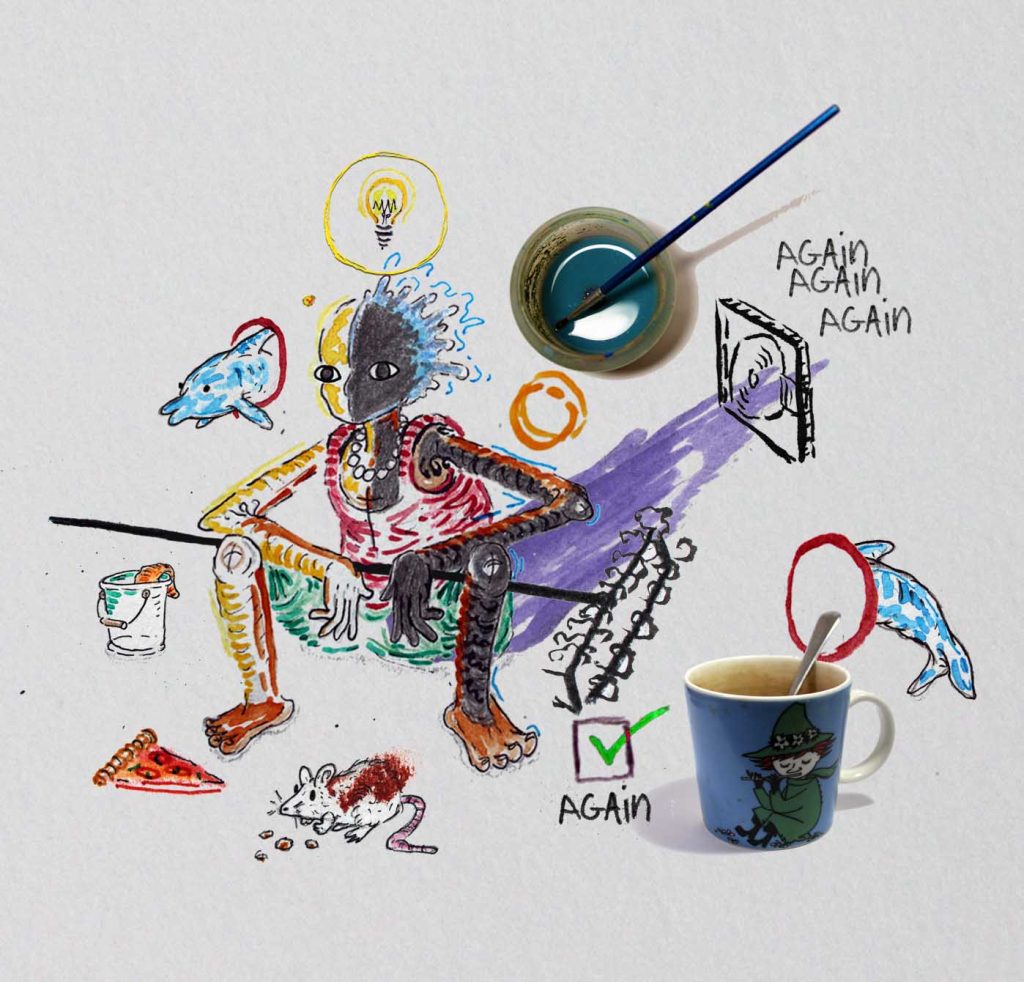
power / force. back back back again

I had a really hard time working with the old footage and photographs from Ventspils, it was too emotionally charged (but not in a spectacular powerful way, more like in a gentle-nagging-weighing-down way). and I was sitting in the studio, breaking down a bit and thinking “this is not supposed to be so difficult and boring, this time is supposed to be creative, playful and life-affirming!!!”

so I asked myself WHERE IS MY POWER

(and I found it.)

I’m actually starting to work on some fun stuff right now that also came out of my archives but it’s not at all what I expected coming into this residency.

so yeah, I don’t think I’m ready to work with that particular video footage yet. I had glimpses of what kind of film this footage could become but it’s out of my reach right now because I’m only starting to come back to my individual practice, plus so many hard things happened in the past 3-4 months (from my housemate leaving without a word, to another burnout from work, to fighting off illegal eviction attempts, to going through assessments with DWP that kept being rescheduled) – I really need to listen to what energies/thoughts/feelings are here with me and ready to be expressed. not forcing anything anymore.

pre-residency interview with Jamie

A still from a video. Two superimposed images in bright harsh colours, in the centre of it there is a wooden figurine/doll with a hula hoop on its hips. The figurine has blonde wooden hair in a bob, light skin tone, it is wearing a wooden miniskirt in dusty blue and a red crop top that says BALLS.
Film still from a video for Ping Pong Bitches / Mommies live performance, violet marchenkova.

Jamie Wyld: Thanks for being part of the Vital Capacities residency programme! Can you say a little about yourself and your work, perhaps in relation to what you’re thinking about doing during the residency?

violet marchenkova: So I am a moving image artist, writer, and community organiser. I make short experimental first person films, some people say they are like visual poems of sorts. I haven’t been able to make a film since 2019, when I had a residency at ONCA Barge, so I’m really excited to reconnect with that part of me and see where and how my practice can develop.

My roots are in being an art historian and documentary practitioner – so I’m hyperaware of the money and power that make artworks in history what they are, and I’m very critical of how realism is signalled and how the truth is constructed. That’s just what goes on in my head most of the time.

I’m currently thinking about the theme “Environment” in terms of accessibility frameworks, experiences of isolation, domestic spaces used for feminist organising (and how we lost that during lockdowns), UK’s hostile environment policy, the designed environment of the house that I’m currently in but being evicted from.

Otherwise, I’m looking at some Wolfgang Tillmans’ artist books I got gifted, I’m reading “No Bad Parts” about internal family systems, I’ve just received my copy of Ф Письмо by isolarii with Russian feminist poetry (that I’m too scared to read because it’s too close to my heart), and I’m watching Queer Eye to sleep because apparently, I’m not okay unless a see a group hug every 5-10 minutes. That is what’s in my field of awareness at the moment.

JW: One of the aims of Vital Capacities is to create an accessible site (so more people can use it) – how do you think this will be an opportunity to develop your way of working?

vm: I love that website. It strikes me as this luscious garden patch, where all kinds of pieces – from voice notes and unfinished thoughts to complete videos – can sit together, cross-pollinate.

I never had a real artist studio! And my whole adult life I’ve been stuck between art institutions and DIY art scenes – between the institutionally validated ways of working and rebellious acts – which is not the worst place to be but it brought a lot of inconsistencies to my life that I used to not know how to hold.

For my creative practice to flourish, and even to simply exist, I’ve always felt like I needed to first organise spaces and structures where art like mine could be appreciated. I think that is what drove me to put so much energy into community organising with Devil’s Dyke Network. Art needs to be shared and when you can’t see any contexts or venues or projects that your work could unapologetically fit in (or those are too out of reach) – you start questioning yourself.

So yeah, seeing this virtual space already set up for me, that is so versatile and served so many different artists before me – I feel held! and ready to express and document ideas.

JW: What would you like to achieve through the residency? Is there a particular project you’ll be focusing on?

vm: Honestly, I just intend to be the most neuroqueer artist version of myself that I can be and stop apologising for it, for being different, for any of that.

In previous residencies, or while at uni, I’ve always struggled with my failing to “do things properly” or was insecure about my film practice, unaware how neuroqueerness draws me to new and unexpected paths that are equally as valid. There’s too much professionalisation of the artist that’s gone down in the past decades, and I don’t think I can perform that to any good outcome. And I think I’m at peace with that.

The thing is that many disabled artists are perpetually emerging, we are constantly stuck in being emerging artists because the consistency and progression that we expect in an artist’s career are jeopardised by barriers to access and the shortage of opportunities. Disability often directly relates to our capacity for labour so things like long periods of inability to work, and maybe just general ableism of the art world are major exclusionary forces. So, honestly, I’m just here to take this paid time, focus on my art and see what needs to be said.

JW: How do you see the next few weeks unfolding? Where would you like it to take you?

vm: My art practice never works out in a planned-out cause-and-effect way. I just love listening to Alexis Pauline Gumbs talk about receptivity and being a vessel, our practice being a portal. Whatever comes through us is a gift. No ego, no control, just receiving.

Usually, I just kind of sketch out ideas, listen to what asks to be made visible. Filmmaking is a space for me where I can speak in a language that is true to me, as opposed to the life of writing narratives on other people’s terms (disability assessments, funding applications, social media, stuff I write in my day job).

I’m looking forward to just sitting down to look at the footage I have accumulated (some important pieces from visiting Latvia and Scotland), playing around with editing, writing a bit more, maybe a new script.

roses are red, violets are gay

This reel is on my Minecraft mood board for sure:

https://www.instagram.com/reel/CPyBLT-lTkb/?igshid=YmMyMTA2M2Y=

.

.

.

Video description: An Instagram reel by @minecraftprimebuilds that shows a Minecraft player jumping over objects/obstacles in a tunnel while in the child’s voice we hear the following words (that also show up in large letters over the video): “Roses are red, violets are gay, I sent this to you cause you are gay”

I played Minecraft for the first time and can confirm it is not bad.

Minecraft is a sandbox video game that was first made public in 2009 before being released in 2011. It has since become the best-selling video game of all time. A game with over ten years of development and lore is intimidating to step into. Instead of just releasing a video game with the possibility of sequels like a movie, the recent trend in video games is to continually make improvements and add complexity over time, through updates. Added complexity retains the interest of hardcore users, and updates keep up with current trends to absorb new users. Developers consistently introduce new skins, maps, items, stories, missions, etc. As a maintenance format for the medium of video games it works. One can’t help but think what other systems could benefit from similar forms of continual improvement and incentivizing.

I am embarking on the early portion of the adjustment period and wondering how long it will take to where the game feels intuitive. The controls are still uncomfortable and there are too many types of blocks to know what to do. Luckily I can stand on the shoulders of giants and channel the wisdom of millions before me by watching Youtube tutorials. So far I have figured out how to build a tunnel and put some light in it.

A portion of straight tunnel, followed by a curvature
…suddenly bats began appearing inside the tunnel within minutes

Minecraft – Videotage

As I was unable to visit Foredown Tower for this residency as it is still closed due to covid. I’ve instead recreated Foredown Tower in Minecraft.

Satellite google maps view of Foredown Tower looking down from a birds eye view. There is a field opposite, then the road and then Foredown tower with houses next-door to the right, on the left of Foredown Tower there is another field.
Satellite google maps view of Foredown Tower
Screen shot taken from Minecraft of the land before I started creating.
Screenshot in Minecraft of the poppy field and dirt path I created.
Screenshot taken in Minecraft showing the sign that says 'Foredown Tower closed due to the pandemic'
Screenshot of the Foredown Tower I created in Minecraft a brick square structure with two large portrait windows and a black roof with further windows going around the edge.
Screenshot in Minecraft of the back of my Foredown tower with grass and flowers.
Screenshot of the back of my Foredown tower a brick wall with a door.
Screenshot of the close up of the door in Minecraft
Screenshot of inside Foredown Tower on Minecraft with brick walls, wooden floor and light coming in from the windows.
Screenshot of the poppy field on Minecraft
Screenshot of a close up of Foredown Tower on Minecraft
Screenshot looking up to Foredown Tower on Minecraft.
Screenshot of the roof of Foredown Tower on Minecraft.
Screenshot of a birds eye view of my Foredown Tower on Minecraft

It took me a couple of days to learn how to use Minecraft. I thought my difficulty was due to my dexterity but was mostly due to my mouse not having a right click and you need a red click to place blocks. I oddly also experienced motion sickness and had to take breaks in between creating.

Augmented reality and darkroom printing

I am interested exploring darkroom printing with AR/VR. Today I downloaded an Anna Atkins cyanotype to edit and create into an AR artwork.

Anna Atkins cyanotype of a leaf. A cyanotype is blue with the outline of the image being a lighter white colour.

I used Adobe Illustrator to edit the print.

1. Use the image trace tool to turn your image into a vector

2. Use the 3D & materials tool to inflate the vector into a 3D shape

3. Used the eyedropper tool on the original blue colour on the print and added this as the material

4. Export the shape as an .obj file

5. Uploaded to Abobe Aero

Screenshot of Adobe Illustrator with me editing the print.

If you have the Adobe Aero app you can scan the QR code below to see the work in AR. Sadly the material hasn’t transferred over and so I need to learn how to keep the colour when exporting from Adobe Illustrator.

QR code

Edit…

I used Vectary to add the colour and I also used Vectary to create into AR.

Screenshot of my work in Vectary.

Please find another QR code to see the work in Vectary. You do not need to download an app for this.

QR code
Photo of the work without the material in the Adobe Aero app. It is a white leaf on beige carpet with a small indoor plant behind it.
Photo of the work without the material in the Adobe Aero app.
Photo of work in Vectary with its blue cyanotype material. The blue leaf is in front of a door with a window looking at a garden.
Photo of work in Vectary.
Close up photo of work in Vectary with its blue cyanotype material. The blue leaf is in front of a window looking at a garden.
Photo of work in Vectary.

The subterranean in Semley’s Necklace by Ursula Le Guin

Research into the subterranean reminded me of Ursula K. Le Guin’s sci-fi short story, “Semley’s Necklace” (1963). In the story, a highborn woman goes in search of an heirloom and is instructed to embark on a journey that will last “only one long night.” Upon returning with the heirloom from only a two-day journey, she discovers nine years have elapsed on her home planet. The story borrows from Nordic mythology and utilizes the concept of time dilation.

The subterranean often represents the collective past of our species’ earthbound existence, which has manifested into the the most recent geological age of the Anthropocene. Yet outer space has always and continues to be considered humanity’s final frontier, associated with things hopeful and futuristic. Le Guin shows these narratives are not at odds with each other and adeptly weaves them in an alternative reality where a being from the equivalent of our historical past is thrust into our prospective future in such a way that the two realities not only coexist mutually but are able to inform one another.

—–

“Can we go soon on this journey? I would not stay long away from my home.”

“Yes. Soon.” Again the gray lips widened as he stared up into her face.


What was done in those next hours Semley could not have retold; it was all haste, jumble, noise, strangeness. While she held her steed’s head a dayman stuck a long needle into the golden-striped haunch. She nearly cried out at the sight, but her steed merely twitched and then, purring, fell asleep. He was carried off by a group of Clayfolk who clearly had to summon up their courage to touch his warm fur. Later on she had to see a needle driven into her own arm—perhaps to test her courage,  she thought, for it did not seem to make her sleep; though she was not quite sure. There were times she had to travel in the rail-carts, passing iron doors and vaulted caverns by the hundred and hundred; once the rail-cart ran through a cavern that stretched off on either hand measureless into the dark, and all that darkness was full of great flocks of herilor. She could hear then: cooing, husky calls, and glimpse the flocks in the front-lights of the cart; then she saw some more clearly in the white light, and saw that they were all wingless, and all blind. At that she shut her eyes. But there were more tunnels to go through, and always more caverns, more gray lumpy bodies and fierce faces and booming boasting voices, until at last they led her suddenly out into the open air. It was full night; she raised her eyes joyfully to the stars and the single moon shining, little Heliki brightening in the west. But the Clay-folk were all about her still, making her climb now into some new kind of cart or cave, she did not know which. It was small, full of little blinking lights like rushlights, very narrow and shining after the great dank caverns and the starlit night. Now another needle was stuck in her, and they told her she would have to be tied down in a sort of flat chair, tied down head and hand and foot. “I will not,” said Semley.


But when she saw that the four daymen who were to be her guides let themselves be tied down first, she submitted. The others left. There was a roaring sound, and a long silence; a great weight that could not be seen pressed upon her. Then there was no weight; no sound; nothing at all.


“Am I dead?” asked Semley.


“Oh no, Lady,” said a voice she did not like.


Opening her eyes, she saw the white face bent over her, the wide lips pulled back, the eyes like little stones. Her bonds had fallen away from her, and she leaped up. She was weightless, bodiless; she felt herself only a gust of of terror on the wind.