IN LIMBO FILM (pt1 freestyle doodling)


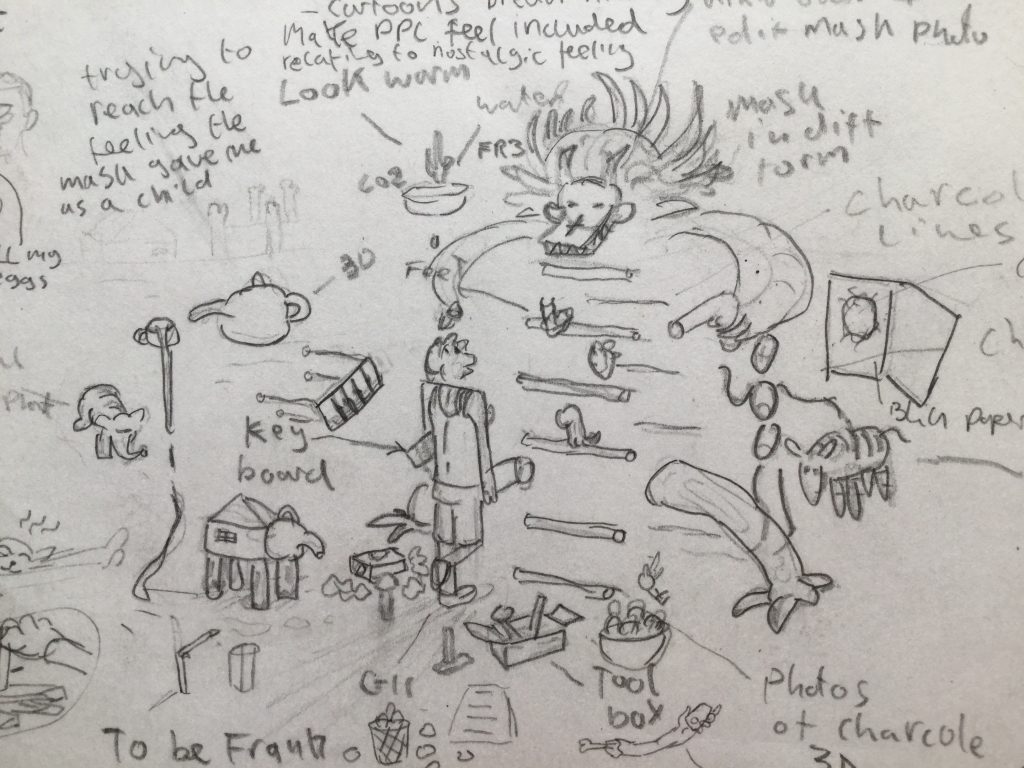
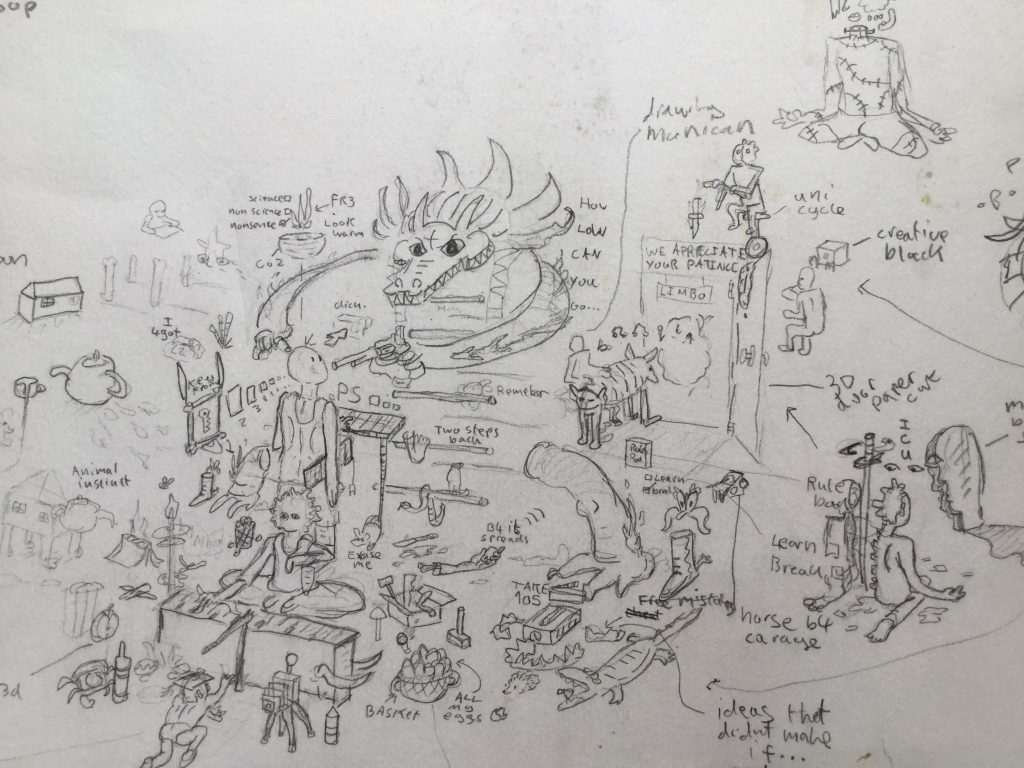
I saw this residency as an opportunity to create a follow up to my 2021 “Thought Experiment”. I started with these rough sketches, my approach was to just put pencil to paper, work off instinct and see what comes on to the page. My thinking was what the subconscious comes up with will always be more interesting to me then any idea or subject I could consciously come up with. I called the artwork “In Limbo”, looking back I think this was manifested from the feeling of worldwide uncertainty since 2020. But realised during this project it also related to the creating process itself, hitting on that mid point in creating something that I think many artist can relate to. When you’re unsure which direction the project is moving or if it even makes sense, like you’re just hanging in limbo to see if things will come together or just fall apart. Being dyslexic i’ve always had a love hate relationship with words, in a lot of my artwork I like to play with words and images and the relationship between the two. Which got me thinking about the word “limbo” and its two meanings, one being hanging between life and death and the other being a party game. I liked this huge contrast between the two meanings and realised what they had in common was an element of balance. Like a train of thought the word balance led me to thinking about a number of other concepts that I ended up exploring throughout the artwork: The balance of digital and traditional art I focus on in my work and how it relates to how I always try and balance and bride the gap between “high art” and “low art” to make artwork that feels less exclusive. The balance of skill and creativity artist use to create, and even more personally the balance of being mixrace and how it means simultaneously being two things and neither at the same time. I wanted every part of this project to reflect that process of creating embracing how erratic and messy it can be.


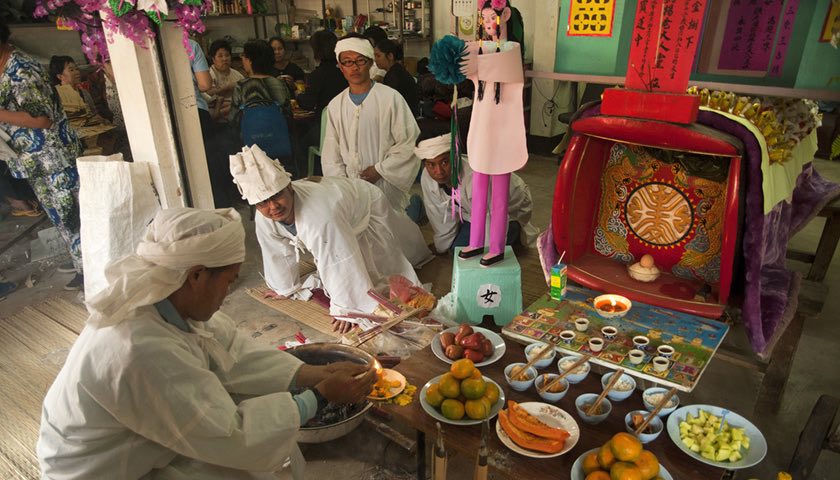
Funeral rites represent an important part of collective behaviour in human societies. According to researchers, humans conducted the earliest burials (i.e. bodies deposited in deliberately excavated graves), deriving from caves in Canaan dating to 90 000–110 000 BP (Before Present).
However, with changes in economic and technological development, the free communal labour and services that were traditionally required for funeral ceremonies have diminished. In most parts of the world today, professional services are required to hold one’s ceremony. The free labour of the community typically involves excavation, touching or cleaning the body itself, building material structures, crowd choreography, gathering offerings, and much more. This type of ritual also embodied a collective social agreement of care, responsibility, and sealing the ‘archive’ of one’s body and spirit.
Now, with the commodification of funeral services and convenience of digital access, it seems that funeral rituals have not only become commodified but turned into a spectacle for entertainment. I use the word ‘entertainment’ lightly but it’s more so to signify the desensitisation we have towards death due to frequency that we see it through the computer’s gaze.
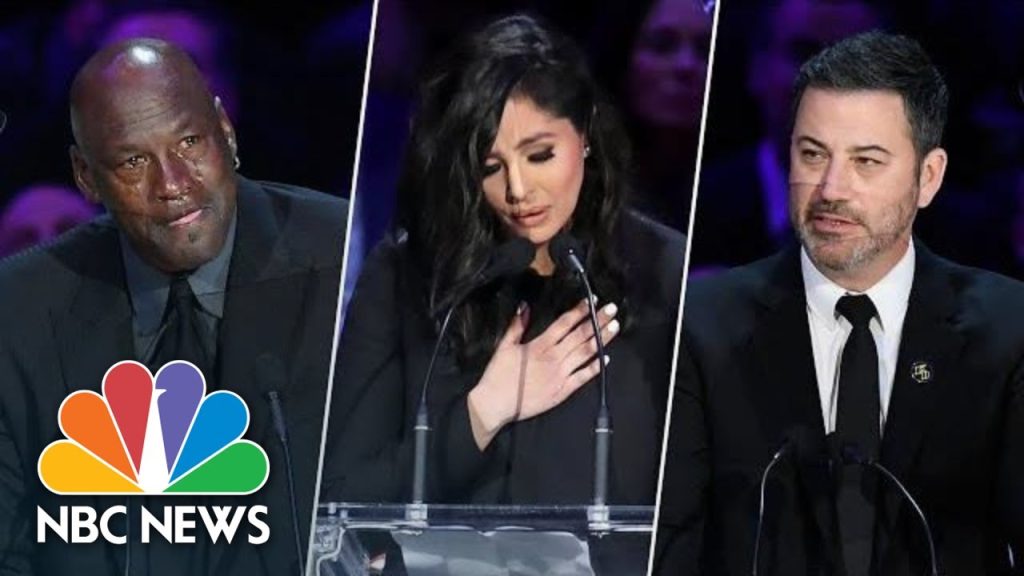
One recent memory I have about this was the reaction to Kobe Bryant’s death. The live television broadcasts and online streams of his ceremony seemed surreal because of how someone’s death could be commodified for digital spectatorship and entertainment. On the one hand, you have people grieving the real person, then on the other you have people grieving the persona, all in real time – physically and digitally.

From a sociological perspective, this appears as a subtle erasure towards the collective labour and social bonds with the dead due to modernisation. In the online sphere, businesses market the illusions of a community when in actual reality in order for us to participate online and utilise our power to ‘post’ or ‘comment’ it requires a sense of radical individualism and self-actualisation. And so, without these communal hands-on elements involved in traditional funeral rites, and increased accessibility to viewing livestreams of funeral and memorial services, how does this affect our relationship with the dead and our own sense of mortality?
I had some exchanges about my work lately, which made me think a lot about the language we use. I feel it is essential to avoid using categories like “visual art” because the comfort zone these words secure is rooted in some profoundly excluding average agreement. Whenever we repeat “visual arts,” we are not communicating any precious information about the artistic practice or the subject of the research; we create a perimeter that bond a conventional understanding of sensing with the privilege of having access to the specific creative experience. It feels like an exclusive category that only announces who will be admitted to the experience of art.
I doubt that the normative understanding of our senses in most European languages is exhaustive so that we can define artistic experiences with those words. The long literary exercises we regard as ekphrasis express this struggle to translate the senses. There must be more if so much effort has been put into describing the experience of a painting in words or music beyond a simple equation of the normative understanding of the sensing.

Most of us are familiar with feeling the sound in haptics. It happens with low frequencies and subwoofers, our stomach and lower belly eat the frequencies, and our breath becomes a continuum with the sonic frequencies. I am sketching ideas to explore the thresholds of the sonic experience, the visual, and the haptic. I am looking for the uncanny territory where I am not finding the right words to describe the knowledge that is materializing; a questioning space where allegories may comfort us and doubts may guide our un-learning.
Sometimes I dream of ancient worlds where fruit and bombs have never mixed. Where family, love and freedom co-exist.
Where blurred lines of nourishment and destruction do not need to exist.
Where culture no longer negates safety. Sometimes, I dream of this.

Image info:
Estabrak // Ummi (meaning My Mother in Arabic) 2021/22 // Archival print under Acrylic Glass, mounted on Aluminum Dibond // Edition of 3
ABOUT: Another offering I’d like to share is of one of my most recent underwater images. It’s a self portrait, and one which was taken in a time of deep isolation and a work which also translates into other works I am currently exploring.
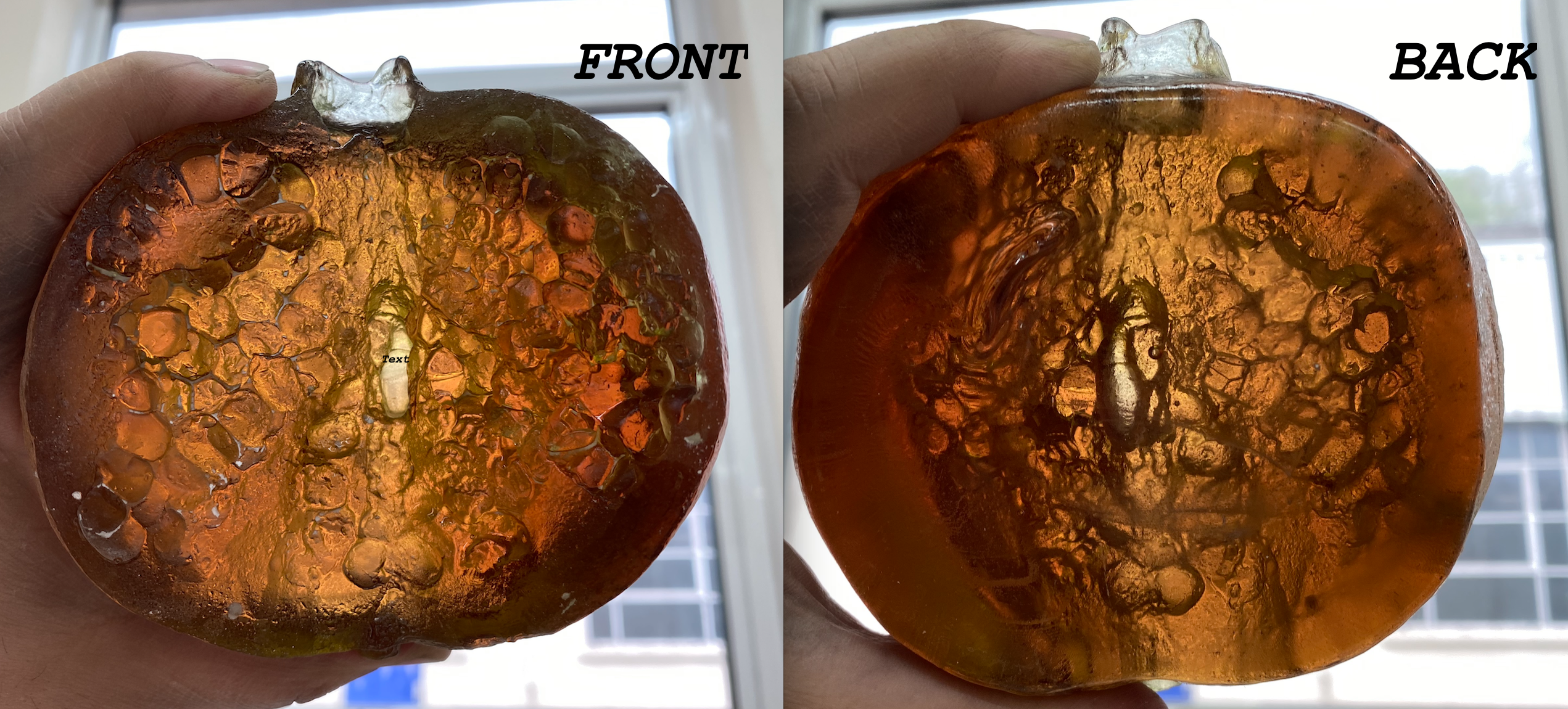
I’ve so much to say about pomegranates, their heritage and the importance of them in West Asia. The significance of it’s name and the body in which it expresses. There’s so much beauty and passion in this fruit, yet so much destruction attached to it.
For years I’ve noticed it’s presence in West Asian arts, yet it’s only been in isolation with internal conversations where I’ve found my relationship to it develop from one of a human eating fruit into a life lesson in history, language, colonisation and love.
Pomegranates have origins all over West and South West Asia, although it can specifically be traced back to Iran. Iran has huge significance to me as it was the place I was born, in exile after my family were forced to flee Iraq.
I’m going to go in more detail about the significance of pomegranates in a separate post which you can find in the research section of my studio, but for now I hope this offering can plant a seed of thought for you as much as it has for me.
The photograph and text were shared earliar this year via the Emeargeast exhibition ‘Dreaming Tomorrow’. And the image Ummi belongs to a current and ongoing multidisciplinary project called Letters To Ummi (Ummi meaning My Mother in Arabic). It is the first image in this series.


After the process of drawing/painting on paper I upload each individual drawing and puzzle them together using photoshop. In the video I place the central figures of the artwork in place and make markings of where everything else will go so I can have a rough idea of how things will fit together. While the process before this feels really organic and working with hand drawing, paints and watercolour. This digital art side of things, while still needing to be creative, feels more like a task of editing all the pieces and seeing how they fit together best.
If you’ve landed here, I guess we may have something in common.. I too am curious to see what will come of this time and space spent with VITAL CAPACITIES.
Over the past couple years, so much has happened, is happening and about to bloom. For me and my practice, it’s been a phenomenally complex, difficult yet generous time of experimentation, of silence and of deeply personal work.
For anyone that knows me or of my practice, you’ll know that I’m intensely connected to understanding the ever evolving complexities of our human conditions. How it relates to our individual selves, to each other and in turn – to our environments.
Oh and I love water.
As I try to navigate the nuances of the vulnerability needed in my current line of work, the conflicting complexities of what to share and what to keep, I’d like to welcome those into this space with a small offering I wrote last year. One which carries the weight of so many other seeds planted across the diversity of my multi-sensory works and explorations.


The above text and image Dear Reader are from a series of works I have been exploring during & since lockdown called A Passing Place. This work was published in 0ct 2021 through Future Venture’s Radical Arts Handbook, Issue 03 – Radical Futures.
Thank you for spending some time here.

Text reads:
I like to think (and
the sooner the better!)
of a cybernetic meadow
where mammals and computers
live together in mutually
programming harmony
like pure water
touching clear sky.I like to think
(right now, please!)
of a cybernetic forest
filled with pines and electronics
where deer stroll peacefully
past computers
as if they were flowers
with spinning blossoms.I like to think
by Richard Brautigan (1967)
(it has to be!)
of a cybernetic ecology
where we are free of our labors
and joined back to nature,
returned to our mammal
brothers and sisters,
and all watched over
by machines of loving grace.
I think this poem is interesting as it resists the dystopian thought of technology. Instead it imagines a techno-utopia: what if all the computers and robots could release humans from capitalistic labour and we could finally live freely with nature? It expresses that if we only imagine a dystopian nightmare, perhaps that is what we will get and simply manifest.
Then again, I don’t think anyone imagined the Internet or technology to get quite dark than it has already. As much as I admire his positive optimism and as much as I want to dream… this is also what I imagine Musk and Zuckerberg would recite to themselves to justify their actions. But I also question myself whether I’ve been encapsulated by this ‘dystopia’ mindset.

Text reads:
The Machine, they exclaimed, ‘feeds us and clothes us and houses us; through it we speak to one another, through it we see one another, in it we have our being. The Machine is the friend of ideas and the enemy of superstition: the Machine is omnipotent, eternal; blessed is the Machine.’ And before long this allocution was printed on the first page of the Book,
‘The Machine Stops’ by E.M. Forster (1909)
and in subsequent editions the ritual swelled into a complicated system of praise and prayer. The word ‘religion’ was sedulously avoided, and in theory the Machine was still the creation and the implement of man. But in practice all, save a few retrogrades, worshipped it as divine. Nor was it worshipped in unity.
I’ve read this short story a few times and it touches upon a lot of ‘optimistic nihilism’ within the technological dystopia that’s explored. Forster’s story influenced a lot of how I think and frame ‘technological innovation’, and it’s interesting how the idea of ‘worship’ always pops up. We worship objects, people, places, entities, spirits, abstractions, and the dead. These rituals are supposed to show what we care about and value, forming solidarity, however before technology these practices were seen through the ‘human gaze’. Nowadays, a lot of our influences and judgements are through a ‘computer gaze’. Breaking it down like this, I find it surreal how we have adopted a ‘computer gaze’ of death when it’s the most humanistic component of all.

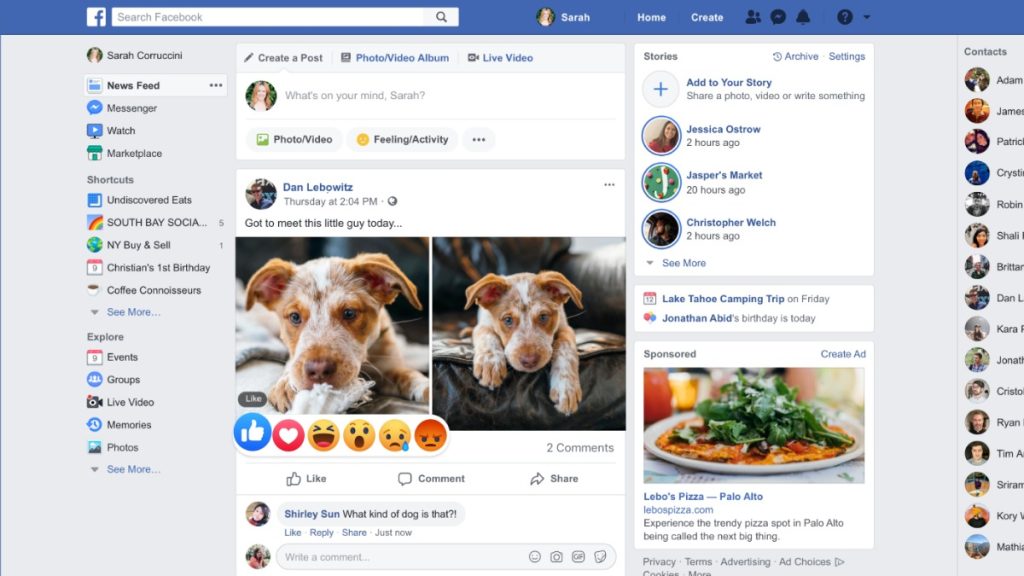
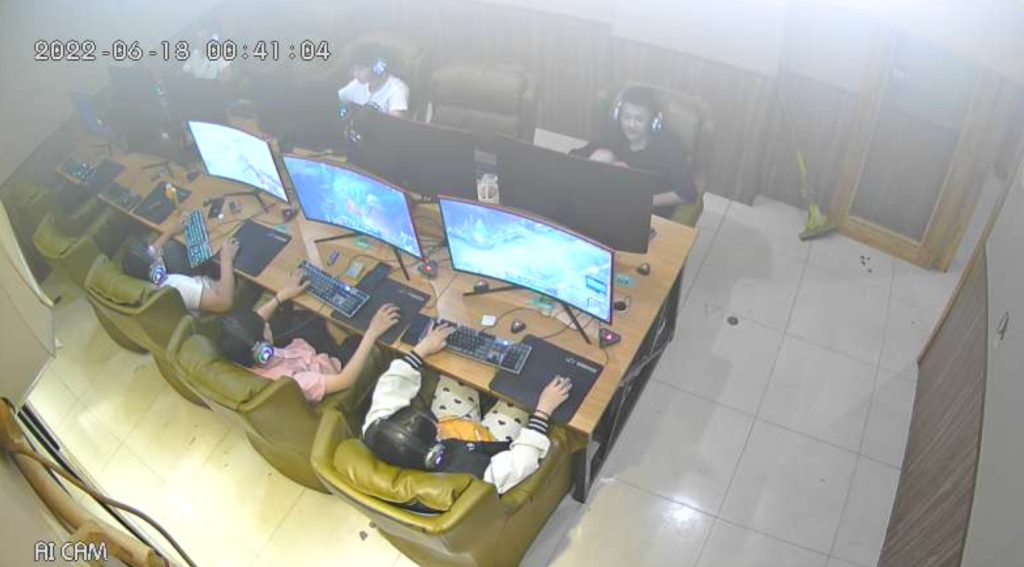
As you can see from the image, this is the source code for my Facebook profile. I come from a mixed Irish-Chinese cultural background where both cultures require the death of someone to have large ceremonial practices and funerals, as a way to provide offerings, safety, luck, and ‘bon voyages’ to the spirit’s next journey. But looking at how the computer gazes at my soul through this image is pretty bleak.

The German artist Hito Steyerl addresses the way digital images are created, shared and archived. Her film ‘How Not to Be Seen: A Fucking Didactic Educational .MOV File’ (2013) takes the form of an instructional video which flips playfully between ‘real world’ footage and digital recreations. Inspired by Monty Python, the work balances critique and humour, showing how ‘not being seen’ has both oppressive and liberating possibilities.

Here is some documentation of ideas and research I’ve been dabbling with. Thinking about the machinery of tech, a lot of the profit derives from aspects such as facial recognition, proliferating social partitions such as race, clothing, age, location, and so on. I’ve been wondering how one’s remembrance online could be continued without Big Tech profiting from our online existence. Perhaps removing the actual person gives one control over their spirit and soul, so that they don’t continue to feed AI data processors and recognition development. Maybe those who really know you will remember the memories from online images. Or maybe this makes the memories of these figures more tangible and relatable. Or maybe it could be completely meaningless.


One of the main themes that kept coming to mind creating “Thought Experiment 2021” was the feeling of being unbalanced, like I was living in the past and future but just drifting in the present. Which is where the design for the central character of the piece came from. Being split down the middle half his body being black and the other white. Which also related to my own mixed black Caribbean and white European background. To me being mixraced Is both a balance of two things, but also feels unbalanced in the fact that the word “half” is used to describe me, suggesting I’m not fully anything. I don’t personally find this offensive, just interesting (I intend to explore this more in my follow up piece over the next month). Elsewhere in the artwork another character is half black and half white and quite literally stitched together, referencing Frankensteins monster. Which I always felt was such a perfect character that’s aged so well in terms of identity and question whether we are how people see us, how we see ourselves, what it says about society of how the “monster” is treated. And I was always inspired by artists taking a conceptual idea and turning it to an extreme literal idea, the same way Frankenstein is exploring the concept of identity, then literally making the main character made up of different people. This almost cartoony comical exaggerated approach is something I love to explore throughout my work. This central character I created felt to embody the uncertainty I felt at the time. He is depicted above frozen in contemplation holding a broom, referencing the way I was using my craft like a groundskeeper to tidy my state of mind and the mess of notes and doodles that would spill across the finished artwork.


Above can also be seen a photo I took of a mask that has hung in my home as long as I can remember. I have vivd memories of me and my older brother being both fascinated and frightened by it as children. It’s burned into my memory as one of my earliest experiences of something evoking so many emotions at once. From curiosity and wonder to terror and playfulness. This became the face of the opposition to the central character in the artwork. I created this shapeshifting mask character as a reminding symbol of how I want my artwork to feel (the world through the eyes of a child). In the artwork it’s both a guide of what I want my own art to feel like. But also an obstacle and opposition in terms of the fear of never being able to reach that goal, or even worse having already peaked as an artist. At the time I was always in competition with myself and every time I finished a piece was met with this weight of anxiety of never being able to create something as good as the last thing I had done. Doomed to repeat myself with watered down versions of what I had already done. These characters feel more personal every time I draw them, and their story will continue in the next artwork I’ll be creating over the next month.


In this next drawing/colouring stage I fleshed out the rough doodle concepts into fully formed characters and ideas, making my thoughts physical. Using my doodles/notes as a kind of blueprint. I use a combination of pencil illustration, watercolour, paint, photography, pen and oil pastels. While spending more time on this drawing phase I start to understand the piece more than I did when I was just scribbling down ideas almost subconsciously. It’s amazing to me how things you create can seem completely random at the time, but make so much sense and feel so relevant to your state of mind at the time in hindsight (I plan to push this idea even further in my follow up to this piece). So much of this piece was about how I felt as an artist at the time, which Is why I included photos of the tools I was using to create the piece itself. worrying about everything from making money as an artist, feeling lost and the worry that commissions were using up my creativity and no longer growing it. While touching on some quite personal and heavy themes, I wanted the piece to counterbalance that with a playful almost childlike feel. This comes from my art always feeling very much connected to my childhood and wanting it have that nostalgic animated comforting feel. While also being able to dive into deeper personal feelings and concepts beyond surface level (kind of like making medicine bubblegum flavoured).


When an idea is finished I always find it hard to remember where it even began, it feels as if the idea has died, reborn and been reinvented over and over. What I do remember about creating this piece back in 2021 is that I had been illustrating commission album covers one after the other and it had been a while since I had the time to create something personal just for myself. Despite loving being able to bring someones else’s idea and music to life through an image, Album covers always have to be a perfectly square shaped canvas, I had started to feel quite literally boxed in and was aching to try something different, personal and out my comfort zone.
I approached this artwork in an entirely new way by going through my sketchbook and gathering all the notes of the thoughts and feelings I had scribbled down throughout the past year. Adding my then current feelings of being creatively blocked, ideas on what being mixrace means, fears of the uncertainty of the future and continuing to relive past mistakes etc. Without thinking I just freestyle doodled rough sketches of these ideas and feelings into visual concepts, adding notes and markings that probably only make sense to me. So I ended up with a really rough kind of visual diary of the past year. The next stage would be turning these rough sketches into fully formed drawings. The next month I see as a opportunity to revisit this way of working and will be creating a continuation of this first piece.