Siphenati introduces his work and ambitions for Vital Capacities.
Intro video by Siphenati Mayekiso
Siphenati introduces his work and ambitions for Vital Capacities.
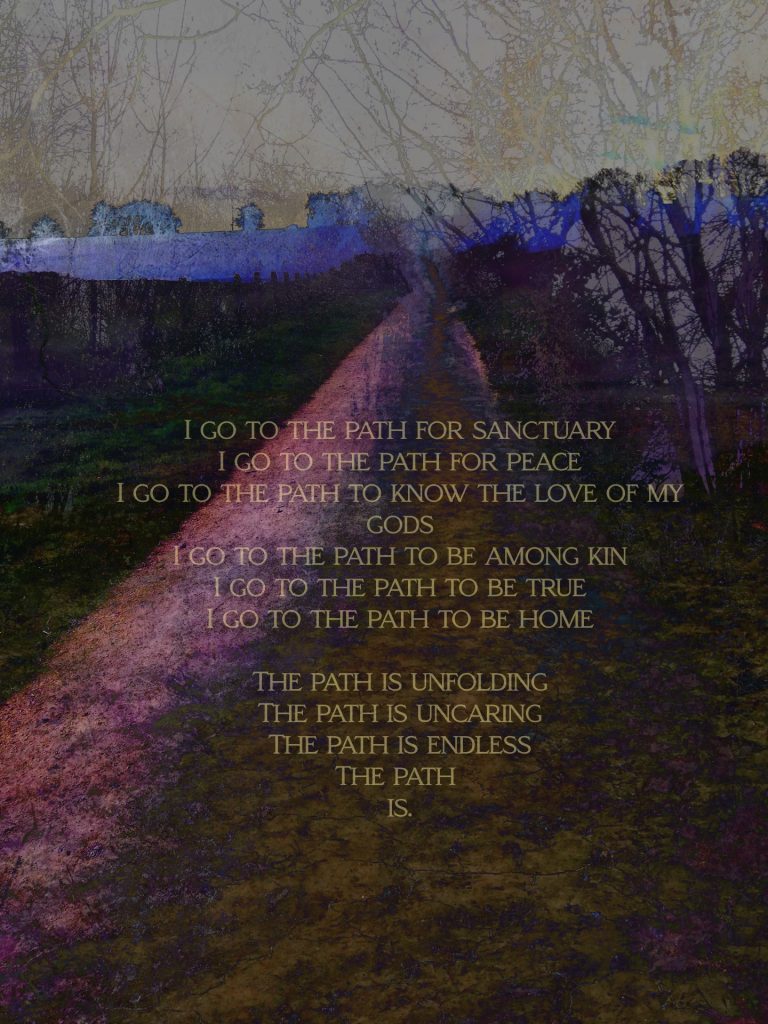
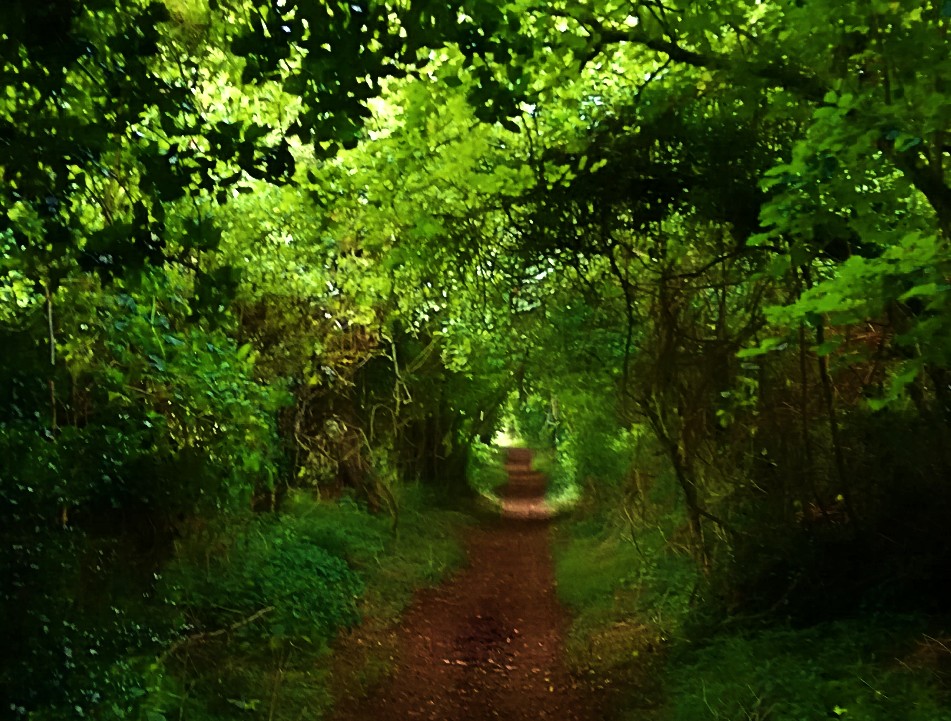
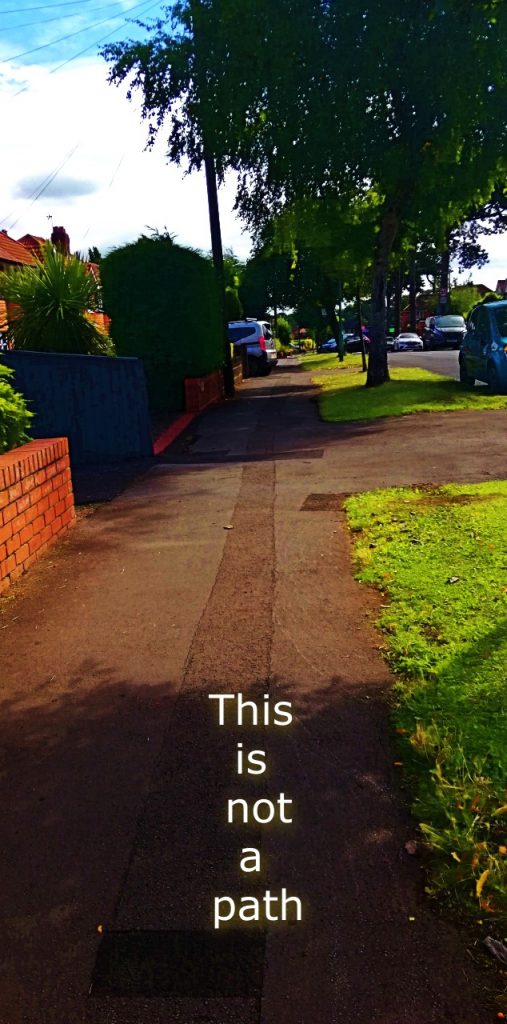
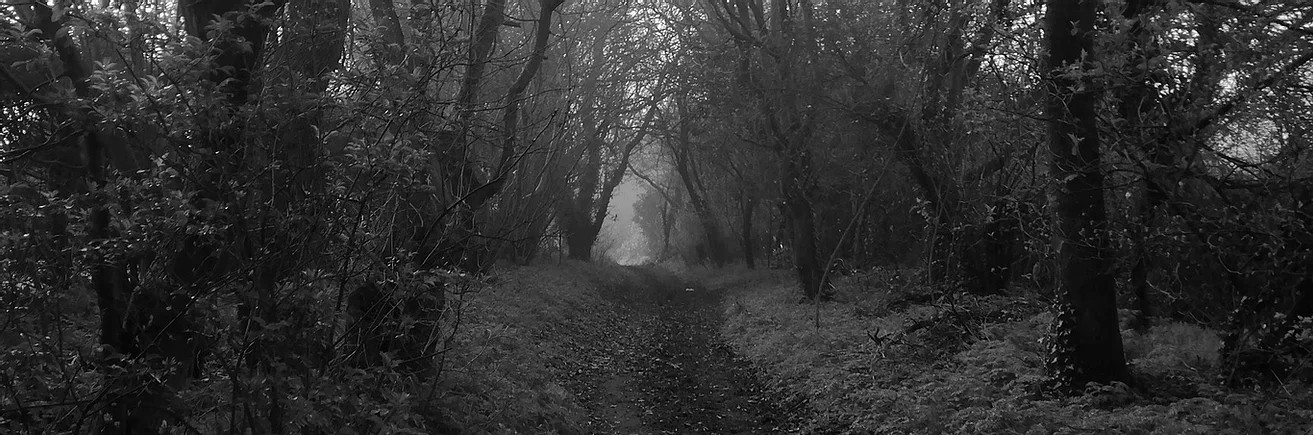
It’s not a straight path,
tarmacked and hot under sun,
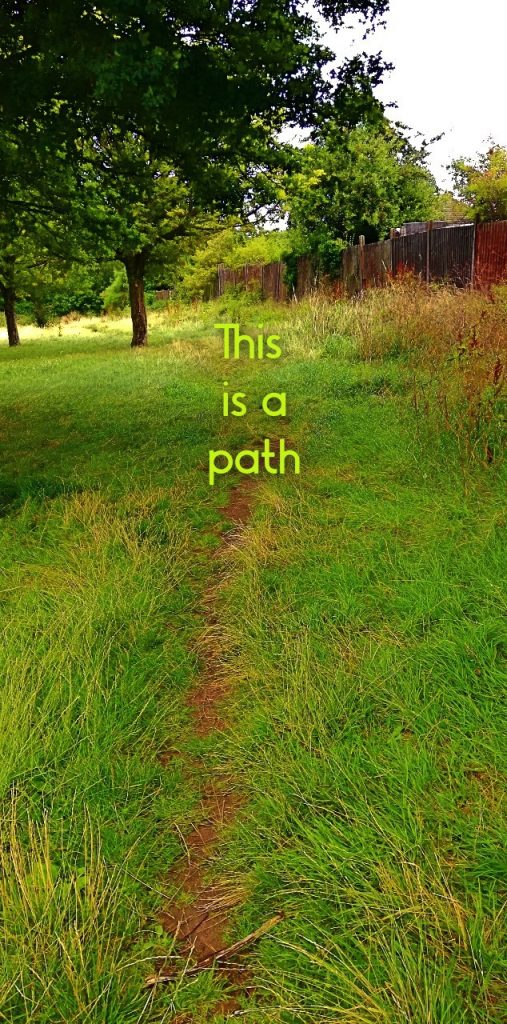
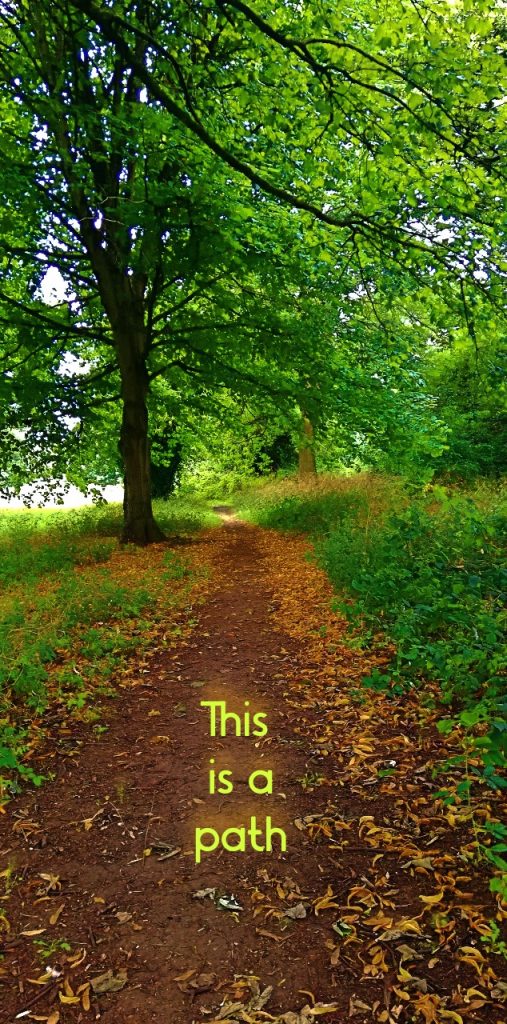
it’s a dirt path,
meandering
under the oaks.
The path is
freckled with shadows,
as I am freckled.
It’s a redhead’s path,
one for
forest beings,
those who
value
concealment.
It’s a path for
being quiet on.
For walking,
softly,
with silent
footsteps.
Neatly,
along the brown, bare earth.
It’s strange to be a visitor in a city you used to call home.
There are places; shops, cafes, buildings, whole streets that I once felt affection for, my university, my favourite cafe, the library and bookshop where I worked, all places that made this city feel like home for a while.
Walking through here today has been very odd. It’s not home any more and the old affections seem to have morphed into something closer to… curiosity? It’s hard to identify the emotion, but I feel an unexpected emotional distance from places that once evoked strong feelings.
The paths however are a different story. This city is a very busy tourist destination, and as a local I walked through it on the hunt, seeking out the quietest streets, dodging through the crowds, avoiding the tourist traps.
I, a being who is almost pathological in my desire to avoid humans, mentally mapped a whole network of quiet paths, roads, streets, snickleways and alleys to get myself through the city by the least busy, least crowded routes. I rarely took the shortest way to my destination, if a longer route was human free, or relatively so.
I can’t recall those routes just by thinking of them, I have a terrible mental memory, but coming here and re-walking them, some 13 years later, I discover that my body memory is superb. My body knows where to go, which turn to take. Even as my mind struggles to recall what is down that alley, around that corner. My body knows.
Weirdly, I feel as if the paths know me too. Buildings, attractions, shops, those things are mere curiosities now, and they care nothing for me, but the routes, the paths I walk again here, they feel welcoming, embracing.
‘Walk there, cross this road here, come down this alley, yes take that corner,’ I feel welcomed back to the old paths, welcomed into this place, this landscape…
Jamie Wyld (Vital Capacities’ director): Thanks for being part of the Vital Capacities residency programme! Can you say a little about yourself and your work, perhaps in relation to what you’re thinking about doing during the residency?
Thank you for inviting me to take part! I always say that I am a neurodivergent visual artist and writer and kind of leave it at that. I tend to compartmentalise my life; over here is art, over there is everything else. I’m trying to bring things together into a more cohesive whole these days though, because that feels more honest. So a more accurate description would be, I am a neurodivergent visual artist, walker, knitter, writer, sewist, pagan, crone-in-becoming, small business owner, mother, disabled, white, cis female, human animal/cyborg. I draw, design, make, illustrate, write stories, write non fiction and spend a great deal of time in an imaginary post-climate-crisis future with a cyborg called AuTCRONE. I’m currently learning to play the recorder.
JW: One of the aims of Vital Capacities is to create an accessible site (so more people can use it) – how do you think this will be an opportunity to develop your way of working?
I think this is a wonderful and important project and I am aware that I actually don’t do enough to make my own online presence more accessible. My neurodivergent brain really struggles with this, writing Alt Text is tortuous for instance (because my brain struggles to simplify things) but I want everyone to be included so I am looking forward to learning more about creating accessible content. I hope it will become second nature to do after spending time working on Vital Capacities site.
JW: What would you like to achieve through the residency? Is there a particular project you’ll be focusing on?
Yes, I’m going to be using this residency as an opportunity to research my interest in paths and tracks. Walking is a very complex thing for me and touches on many different areas of my life and practice. For instance, I have psoriatic arthritis, a chronic autoimmune disorder, which means that my body often hurts and walking can be painful, yet walking also helps ease my condition, helping my joints stay relatively flexible. I am invested in the idea of walking as medicine, though I don’t think it has to be done on two feet. Following a path, actually or metaphorically, especially a path that takes a person outside and into the world, feels like an inherently positive act.
I find walking a very creative thing to do and I often record my walks using video, sound, photography, writing and drawing. I also use walking as an opportunity to test my ideas regarding clothing, hand work, relationship to materials, my relationship to capitalism and testing minimalism/essentialism. Walking connects me in a very direct way with my ancestors, with history, and is an invitation to become an animal among animals.
Hmm, walking is a very complex subject for me! (laughs) I want to use this residency to tighten the focus of my thoughts, using the notion of The Path to direct my making and thinking.
JW: How do you see the next few weeks unfolding? Where would you like it to take you?
One of the things I am looking forward to is the relationship with the other artists and curators involved in the residency. I’m excited to see what this cohort is working on and hope that some creative and interesting conversations will happen between us.
I’m really looking forward to the opportunity to work ‘deep,’ to focus on my interest in paths and tracks. I don’t really know where I will end up, I’m just following the path as it unfolds, I don’t want to know where I will be at the end of this journey until I get there!
Jamie Wyld (Vital Capacities’ director): Thanks for being part of the Vital Capacities residency programme. Can you say a little about yourself and your work, perhaps in relation to what you’re thinking about doing during the residency?
I’m a dancer with a disability from South Africa. I have been working professionally for the past 14 years. I am also a teacher in inclusive dance and have received training from Alito Alessi. My interest for integrated work started after I saw an inclusive dance production when I was a student and this shifted how I see disability and dance. What stood out most was at some point during that performance I stopped seeing the wheelchair and I saw the artist, and in that moment I realised this is how I wish society could see persons who live with disabilities.
During this residency I wish to explore my relationship to my chair. What this means to me and how it has impacted my life. This is something that I’ve realised in my own journey; something that I, a lot of times, have not paid attention to. How much I rely on it, need it, and, at times, forget about it.
JW: One of the aims of Vital Capacities is to create an accessible site (so more people can use it) – how do you think this will be an opportunity to develop your way of working?
Accessibility has always been something very close to my heart. There is always room for growth and improvement. How I think this will be an opportunity to develop how I work. To start with I am very interested and feel very passionate about creating work that is accessible for persons with visual impairments. Although I do not have experience in how to go about creating this access I am open and ready to explore and look into this.
JW: What would you like to achieve through the residency? Is there a particular project you’ll be focusing on?
What I wish to achieve? I’d like to see this exploration come to life with a short video presentation. With this my hope is to shift how we see wheelchairs, or any assistive devices and the fear attached to it, or that we as people have placed on it. To leave us with something to think and talk about and have more room for acceptance of the unknown.
JW: How do you see the next few weeks unfolding? Where would you like it to take you?
At this point, to be honest, I would like to learn as much as possible from everyone I meet and am excited to be in a creative space again. Find out how these ideas and conversations take shape and unfold in creation.

I have really enjoyed occupying this digital studio space and having a dedicated period of time working on a single project. The support from vital Capacities and Film London has been amazing and I am excited to develop all of my research and tests into something to present as part of the exhibition later this month.
I am battling my own internal ableist voices which are telling me that I could have done MORE, posted more, worked more.. I have been resisting the urge to be professionally hyperable.. (yuck). And in many ways I have failed because I am exhausted.
So now it’s breaktime! If anyone needs me I’ll be in a static caravan on the Yorkshire coast for the week and you can speak to my out-of-office autoresponse until then.
An improvised film test of the muscle costume and PE kit made for me by Max Allen with a new song that I’m making with Hang Linton. A million points to anyone who can figure out where the sample in the song is from or who it is.. I just tried out some different poses and gestures from my research, some different lighting and filmed it on a phone on my studio bed.
Visual Description: I’m wearing a sheer mesh muscle suit, long sleeved top and trousers, and a shiny blonde mullet wig, my own naked body is visible underneath. I am washed in orange light, stood on a white platform in a white room with a dark coloured floor. I pose and flex like a body builder and pull strained open mouthed faces. I am wearing a footy tabard over the top of the muscle suit, it has ‘FORGOT ME PE KIT’ and ‘Ladette’ written on it, it’s blue and red. I’m washed in a bright green light. I lift a footy banner or scarf that says ‘BUGGER OFF’ on it, it has tassles hanging from it, I’m swaying from side to side, I drop it to the floor and direct my right arm out to the side as if declaring something. I am back to wearing just the muscle suit and wig, this time washed in a gentle blue light and lying down on the bed, flexing and posing and pulling strained open mouthed faces.
Audio Description: An electronic bassline track that sounds a little bit like Prodigy with some trip-hop spacey tones thrown in. It features a repeated sample of a middle aged person with a strong accent that is probably from Essex or the East End of London saying in an irritated voice, ‘A loada rubbish, them lot up in the Houses of Parliament, terrible’.

This is an experiment into creating my own hybrid Frankenstein mascot monster bodies in footy diving positions. I would love to do this with irl second hand mascot bodies one day for an installation, taking a few apart and sewing bits back together, so it’s cool to be able to do some digital mock-ups and think about how I can use them sculpturally in an online exhibition to accompany the video work. I’m thinking about some t-shirts one day maybe too. I’m looking forward to developing this idea and creating more of these.
This was created with A LOT of help from Hang Linton and their stellar photoshop skills.


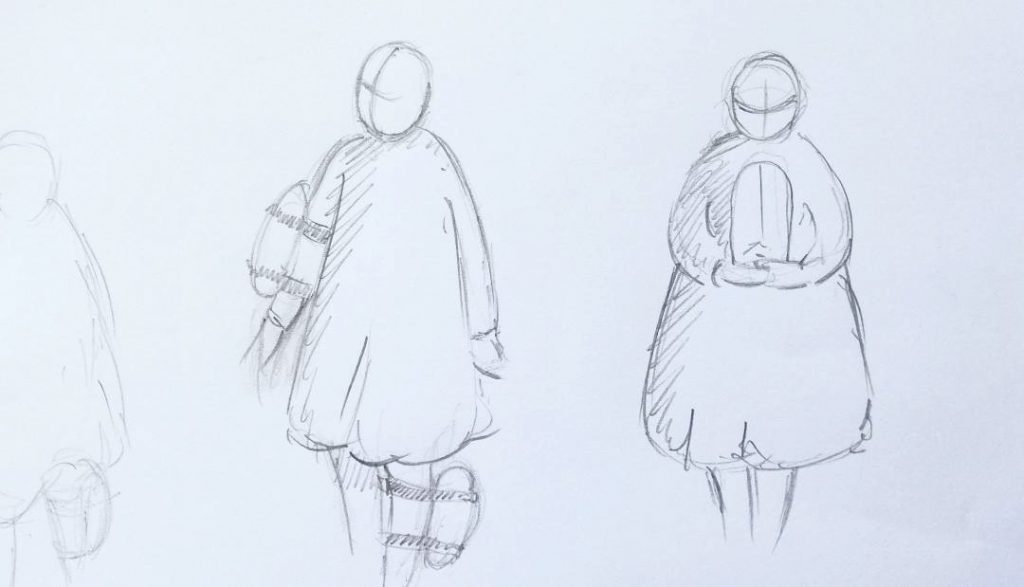
I’ve been working on a costume with fashion designer, Max Allen, who is a school friend that I’ve known for yonks (since we were teens). The idea was to create something that combined the joke shop fancy dress muscle suits with the saggy and misshapen elements that mascot costumes have, as well as playing with sports kits. (See Research space for inspo images).

An experiment pairing The Champs cover song with a collection of footy dives and drama.
I like the choreographic elements and the theatrical performance of pain and sickness, even though the intention behind it annoys me, as does the amount all of these players are paid.
Next, I want to find a way to integrate a visual description. I tried doing a version of The Champs song as the visual description but it didn’t work because not all of the words were clear in that ‘style’ of singing so I’m going to try another way using a pundit or commentator style recording.
I also want to take into account the attention capacity of viewers and the fast choppy pace of this video could take up more energy than it needs to. I edited it to the length of the song for now but I think it could be shorter. I want to focus much more closely on the gestures present during these performative moments and find ways to slow them down without completely abstracting them.


I love the Champions League anthem theme song because it’s so pompous and dramatic in every way, for something that is, well, just footy. If you haven’t heard the original, you can listen to it here. I decided to do a cover to hopefully develop into a soundtrack for a video with some of my own lyrics later. I made it with my partner, carer and collaborator, Hang Linton.
Image Description for track video: The video has a still image of a football foul on a very green pitch involving two players. The player on the left is wearing a dark blue kit, he is on his hands and knees bent forward, his back arched and his head looking slightly to the left towards the other player on the right of the image. The player on the right is wearing a white kit, he is balanced on his right knee and right hand, the rest of his body is arching backwards, as if twisting and falling. His eyes are closed and his mouth open as though he is in some pain. On both sides of the image is a border created from the The Champions League logo which is a black and white football where the black sections are stars. They are stacked on top of each other to create a border either side of the photo.

A long-term enthusiasm of mine is mascot costumes. I have a collection of images on my laptop and phone of my favourites. I especially like Tweety for reasons I will explain in a later post.

This video (click above ^^) documents the first part of my walk down the River Cole, as well as a lot of anxieties present in the first lockdown in 2020 in the UK. I made the video for So Remember the Liquid Ground , an exhibition curated by Benjamin Darby, Yoojin Kang, Akis Kokkinos, Angelina Li, Lenette Lua and Louise Nason as part of the MA Curating Contemporary Art Programme Graduate Projects 2020, Royal College of Art in partnership with Gasworks.
Aubree Penny – a friend and also curator – commissioned me to perform Some Men Have Mistaken Me for Death in a sex workers graveyard in London, AND commissioned the film version of After the Ice, the Deluge for An Alarming Specificity at Haverford College in the USA. London
Aubree wrote an audio transcription of Watershed, which you can read here: https://vitalcapacities.com/3108/
And a visual description, which you can read here: https://vitalcapacities.com/3110/
Jamie Wyld (Vital Capacities’ director): Thanks for being part of the Vital Capacities residency programme! Can you say a little about yourself and your work, perhaps in relation to what you’re thinking about doing during the residency?
I’m an artist, writer and educator from Cape Town in South Africa. I live in Birmingham in the UK, a place people think is terrible, but I really love. My work is about bodies, ideas, and things, that don’t fit into near categories, that move between states – like bleeding women; genderqueer people; and melting icebergs. I am hoping at the moment to make work that builds intimate and complex relationships between bodies and nature, often quite literally by putting myself in a river etc.
JW: One of the aims of Vital Capacities is to create an accessible site (so more people can use it) – how do you think this will be an opportunity to develop your way of working?
In the play I made with Carl Gent last year, All Us Girls Have Been Dead for So Long, we had all of the dialogue projected on the walls because our actors didn’t have time to learn it, but also because it made the play more accessible for hearing impaired people. We also had a BSL interpreter called Richard dressed as a mermaid and sitting on a TV. I am hoping the
residency can expand my ways of thinking about accessibility as something that is always already in the work, as opposed to something that is added on. I am interested in what the online equivalent of a BSL mermaid called Richard is.
JW: What would you like to achieve through the residency? Is there a particular project you’ll be focusing on?
I am working on a project where I walk the length of the River Cole, a river that runs past the top of my road in Sparkhill in Birmingham.
JW: How do you see the next few weeks unfolding? Where would you like it to take you?
About two miles from my house there is a community Stables where I volunteer. The river leads to it. The walking Is a very laborious process because of my costume, and the unpredictable-ness of the river and riverbed. My boots keep filling with water, also. I am hoping that in the next few weeks I will reach the stables and be able to interact with and
film the horses as part of this work.

I ran three workshops during the residency. Each of them had eight participants signed up for different occupations. I create a virtual journey ran on Hubs by Mozilla. The journey to utopia start with a train trip then traveled to several worlds to learn the idea of utopia and what other utopian did. At the end of the workshop, the participants will co-create a utopia that solved different problems in that specific world.

Spacetopia is an interesting world. There’s no gravity in space so everyone will be flying. The spacecraft broke and they stuck here. The utopians have enough food and water but they will need to decide whether to stay here or prepare to explore another world. If their team chooses to stay, they will need to build settlements, food, facilities… etc. If their team chooses to leave, they will need to split the team to work on base to repair the spacecraft and the other to explore places to build outside this galaxy.
They played both part, built a settlement and explore the outer space. Here’s what they build and what they found.


This Utopia is created by “A Train to Utopia” workshop participants, the name of the participants were display in the utopia tower. To access it please contact me.