
 Accessing this site
 Display settings
 Artist login

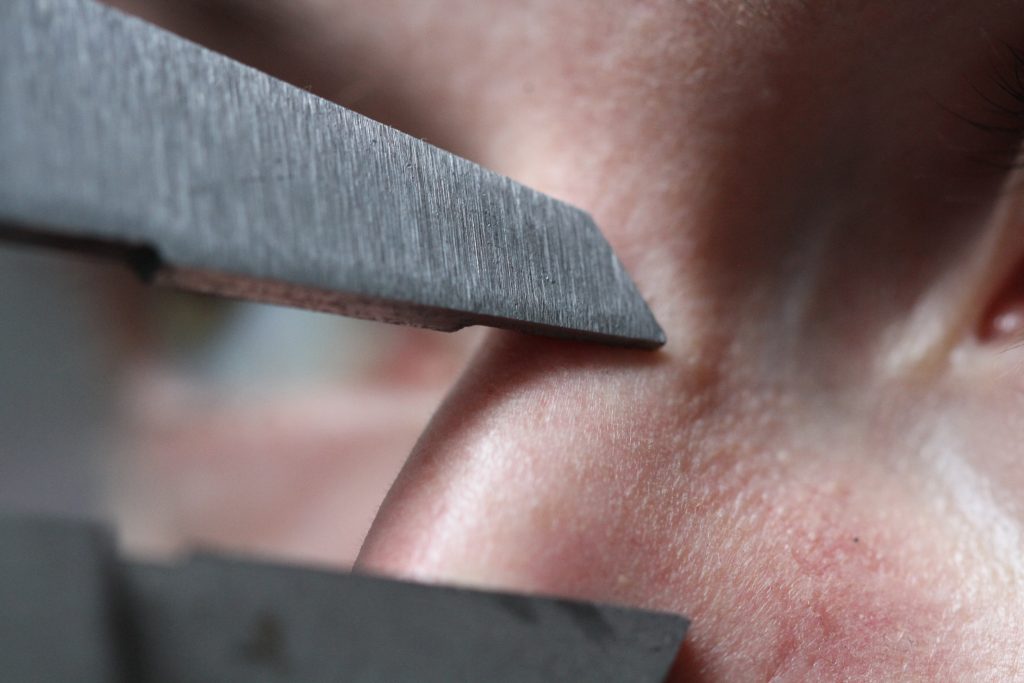
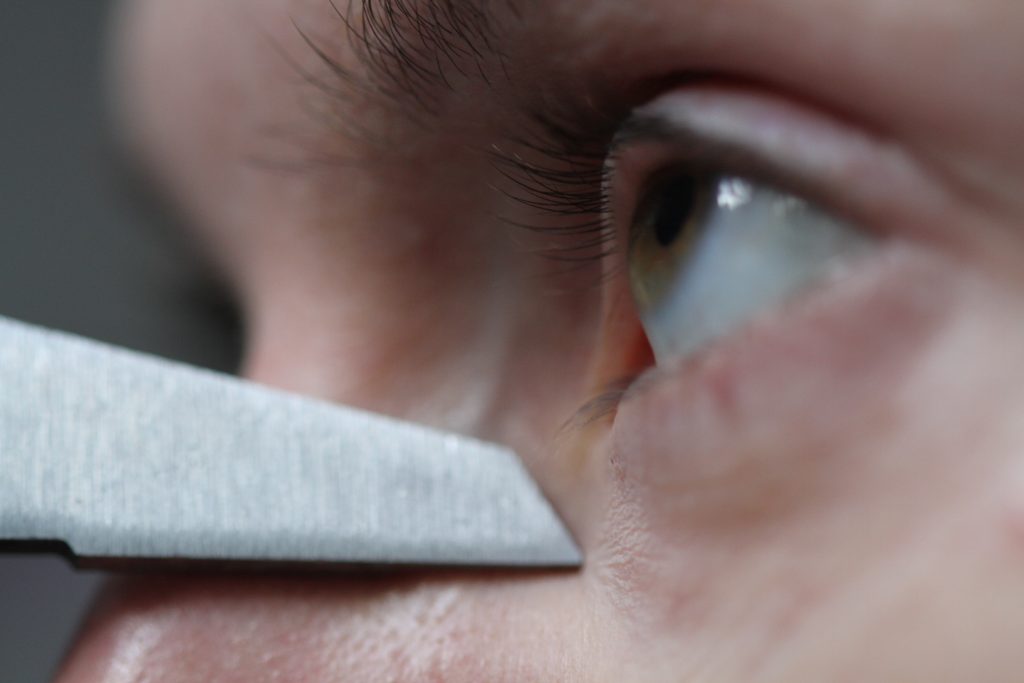
Image Description: Two close-up colour photographs with metal callipers pressed against the face of a pale person, measuring the bridge of the nose in the first photograph and the eye socket in the second photograph.
‘Aquiline nose, large at the base’ Burton, R.F. (1893). Personal Narrative of a Pilgrimage to AlMadinah & Meccah
‘Hollow Eyes’ Charles M. Doughty, Travels in Arabia Deserta (1888)
Historically, travelogues of (usually extremely wealthy) white Western people visiting the SWANA region included many descriptions of physical features, and the practice of physiognomy or interpreting a person’s attributes and values from their physical form, and by extension the characteristics of a whole community and society. In Orientalist constructions of the SWANA region, this may include a broad range of conclusions, usually that they are ‘wild’ and ‘passionate’, or ‘untrustworthy’ ‘lazy’ and less ‘civilised’ as a rationalisation for imperialist intervention and colonial invasion.
This assumed white physiology as the norm, and in order to differentiate people who looked different to this they were usually compared to food or landscapes in the region rather than as people, including phrases like ‘almond eyes’ or ‘olive skin’.


