corps à corps

Image Descriptions:

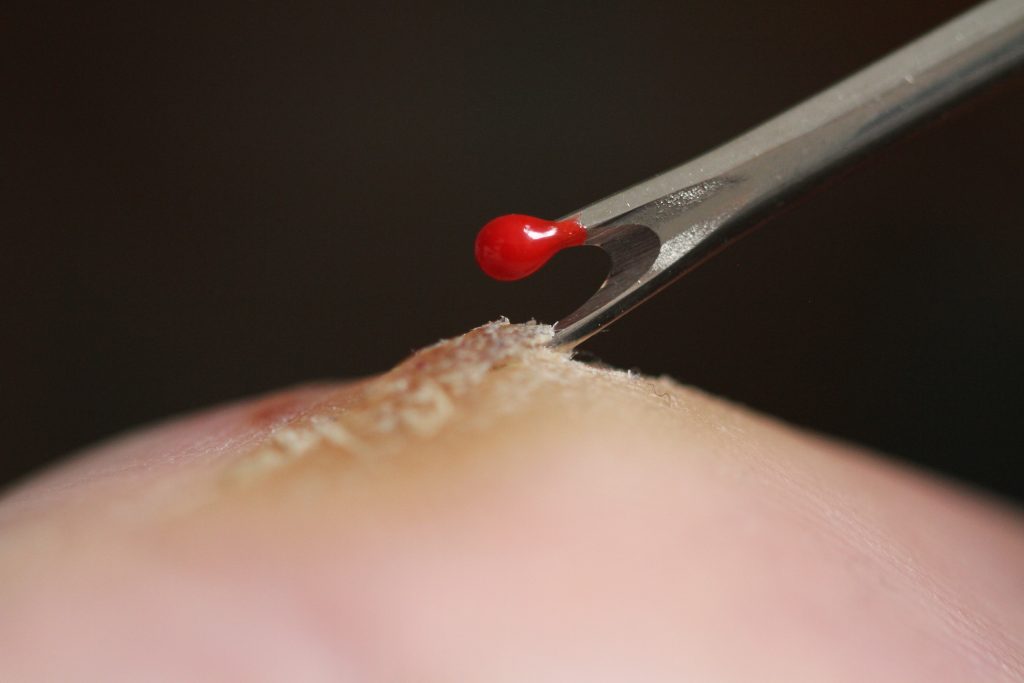
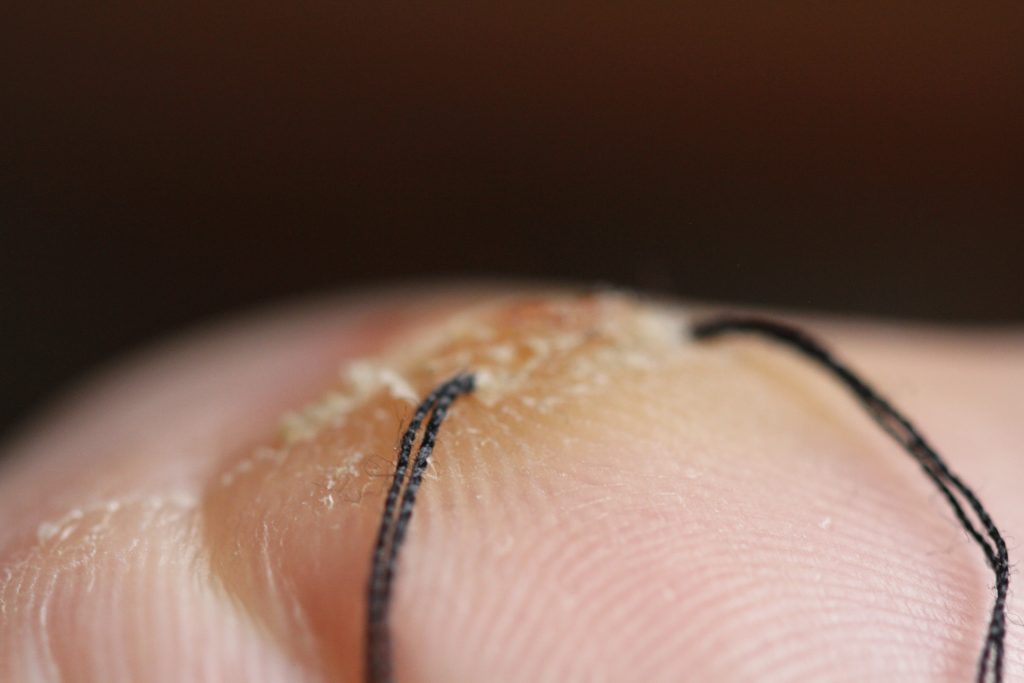
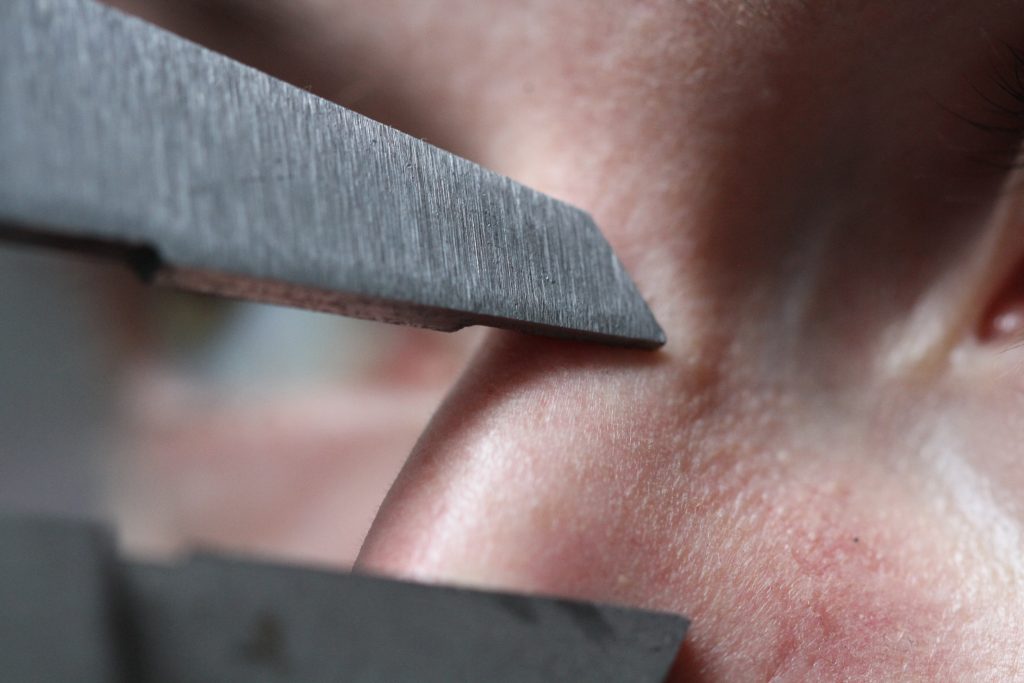
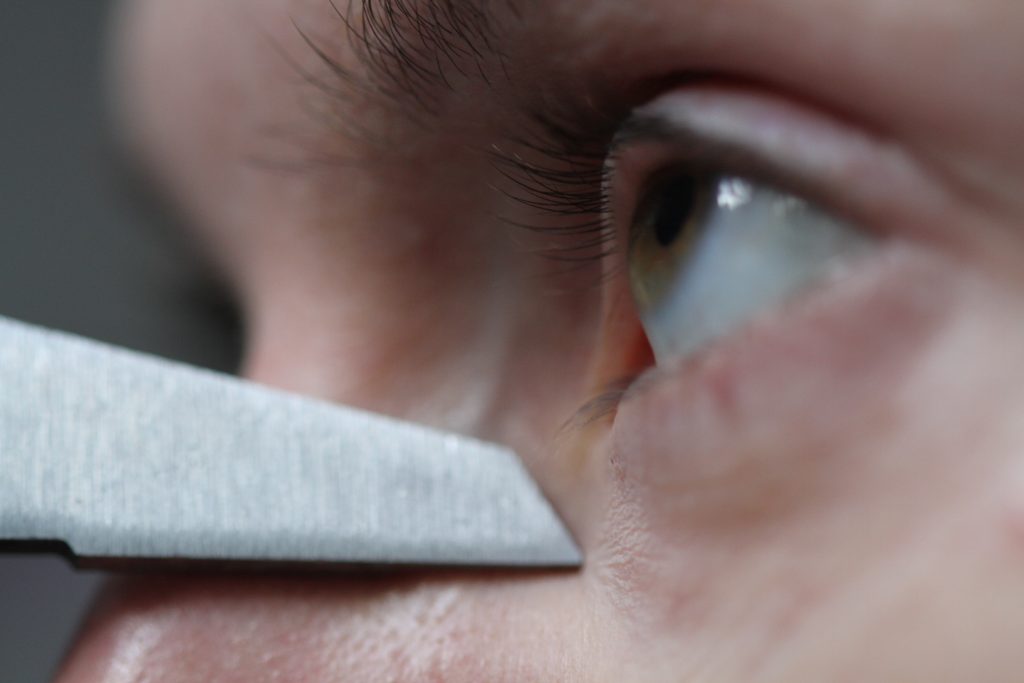
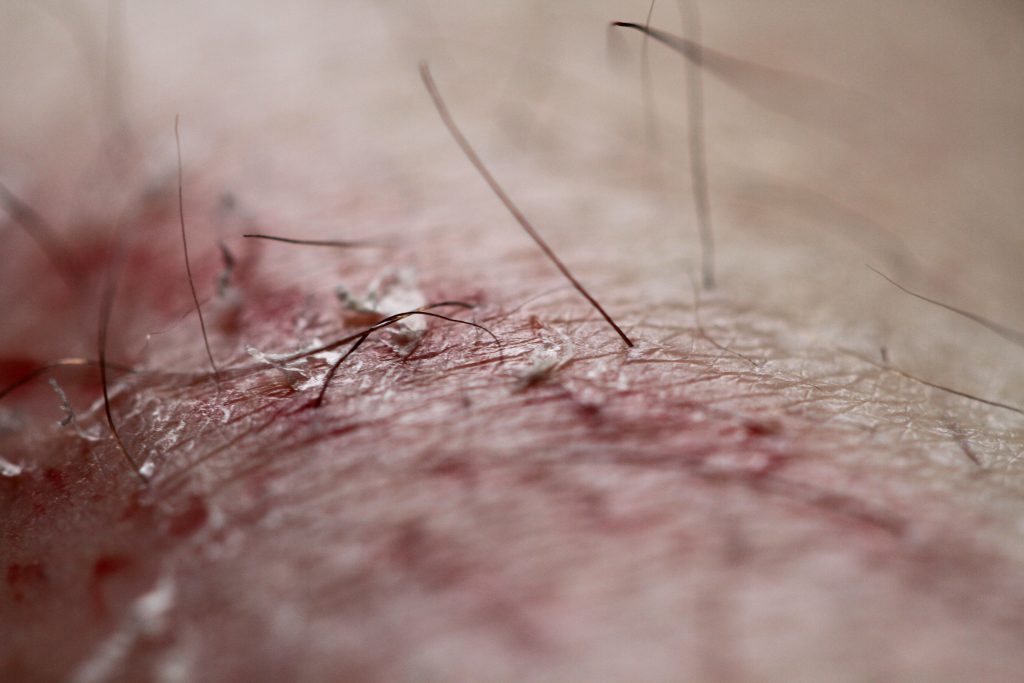
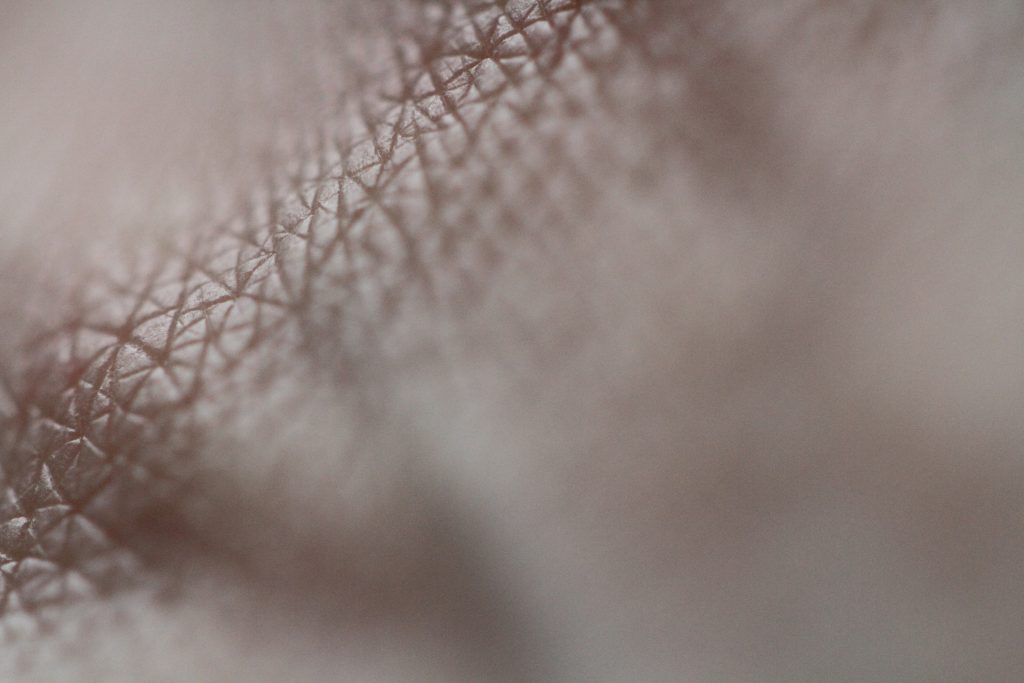
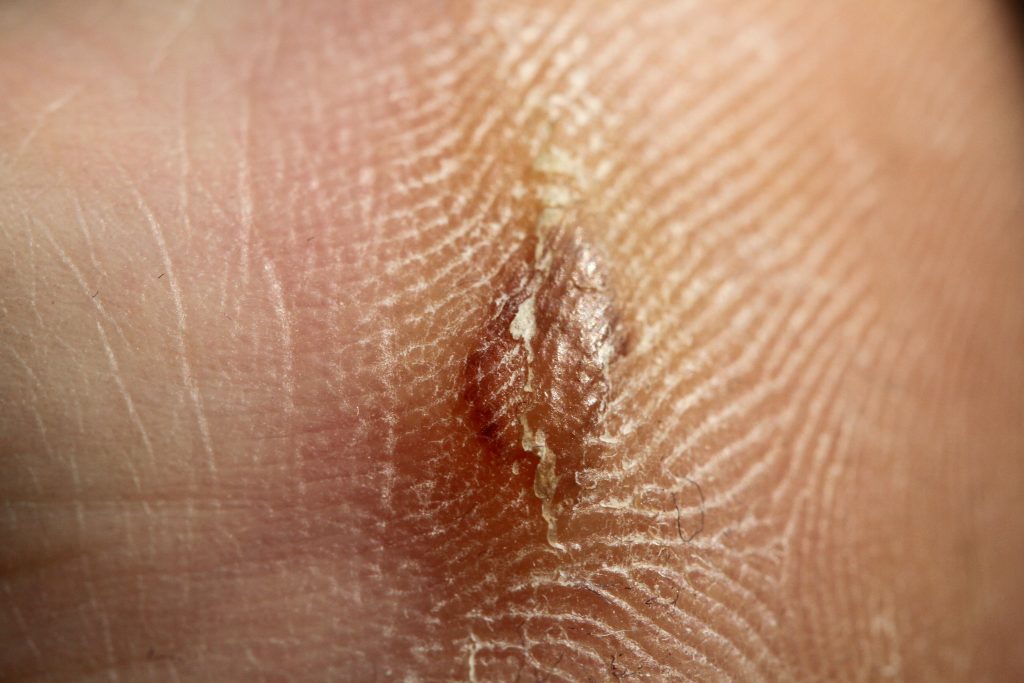
Three close-up colour photographs in landscape orientation, zoomed-in to the surface textures of a pale person’s skin.

  1. Close-up of grazed skin, mostly blurred except for an area where the image is in hyper-focus (roughly a strip running horizontally through the image), with red and orange hues. We can see part of the skin is red with blood rushing up just underneath the surface, and the top thin layer of skin is torn where the skin looks like it is starting to flake off. Black thin wiry hairs dart out of the skin surface mostly vertically, but also in other erratic shapes and multiple directions.
  2. Close-up of skin, mostly blurred except for an area where the image is in hyper-focus (a diagonal line from the bottom left up to top centre), with some pink but also cold green and blue hues. The area in focus shows the skin micro-relief of furrows and ridges, which creates a pattern that looks like interlocking triangles. In the blurred part of the image we can see blue veins underneath the skin surface.
  3. Close-up of skin with a callus in the centre. The photo has orange, yellow and pink hues. The skin at the edges of the photo is a paler pink, but towards the central callous it becomes darker orange and yellow. We see grooves in the skin surface all over, but the closer they are to centre the harder and more defined the ridges are. It almost looks like a physical landscape with clearly defined contours.

So Much I Want to Say

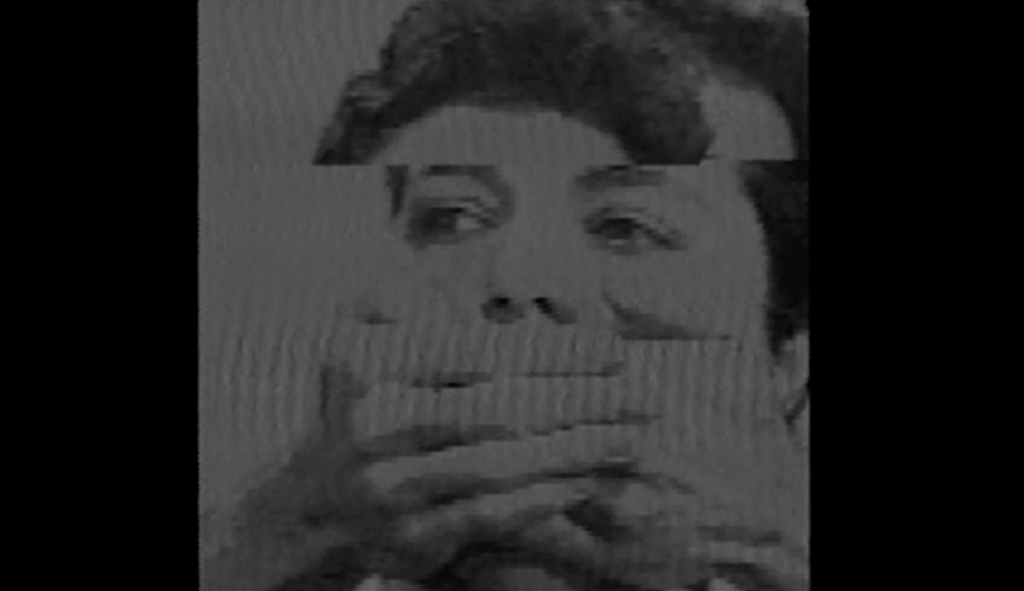
So Much I Want to Say (1983) Mona Hatoum

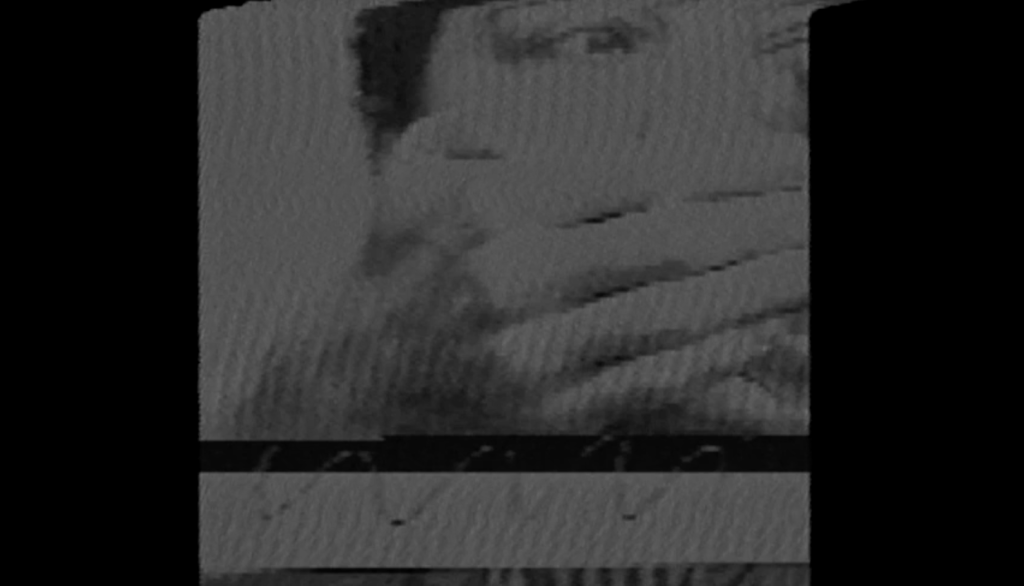
This moving-image work uses a series of close-up images of the artist with a pair of hands reaching from behind her to cover her mouth, which she is struggling to remove. Hatoum is a Palestinian artist who grew up in Beirut, and was studying in London when the Lebanese civil war broke out and she couldn’t return; this  work is a directly addresses the impossibility of speaking about traumatic events, such as displacement. The video uses images from her performance work of the same name, which was shown as part of Slowscan live satellite transmissions between Vienna and Vancouver (Wiencouver IV), where an image is received every eight seconds, and sound was transmitted via telephone. 

It addresses similar themes I was exploring in Aphonia, about speech, agency and the struggle to be heard. Re-watching this film in terms of research around c-PTSD, the freeze frames images remind me of memories that can’t be processed and integrated, and that return as flashbacks. The soundtrack is Hatoum continuously repeating the phrase ‘ So Much I Want to Say’, which is said gently but also with desperation and urgency; the insistence reminds me of the relentlessness of c-PTSD flashbacks, and the work explores the struggle between the need to speak, but speech always being obstructed. Given the current political climate in the UK, perhaps it can also resonate with increasing restrictions or censorship of speech, including speaking about Palestine and Lebanon.

Alpha

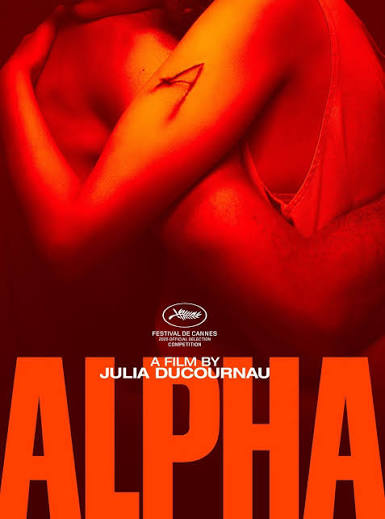
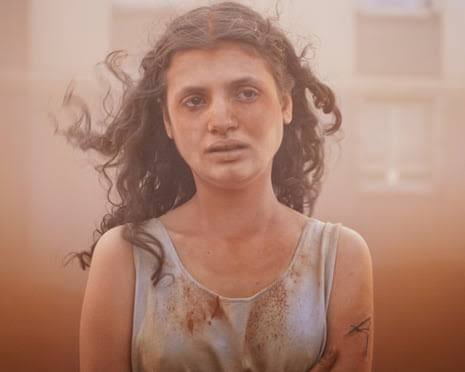
Alpha (2025) is the first film by the French film director Julia Ducournau that draws on her Amizagh heritage (a community indigenous to North Africa).

It explores an Amizagh family living in France dealing with intergenerational trauma, addiction and grief, while the presence of a new virus causes wider collective anxiety; it touches on a lot of themes in my work and research exploring intergenerational trauma in the Lebanese diaspora, and experiences of illness and addiction, and the way the film is shot is intimate and visceral, similar to the world I’ve tried to build through making moving-image works. The film uses body horror to express embodied experiences of illness; how the virus can be spread and who can be effected is unknown, which leads to an atmosphere of collective fear and social stigma, drawing parallels to the peak of the HIV/AIDS pandemic and Covid-19. 

There are cultural differences in how they approach the virus, from the grandparents of the Amizagh family, to the mother who is a medical doctor, and feelings of disconnection when there isn’t a shared spoken language between Alpha and her grandparents— but there is also a through-line of how care is expressed through persistence and maintaining family ties, and the impacts of grief.

Other Grief(s)

One of things I intend to try during this residency is to be simple and direct; in my artwork I tend to obscure and build layers around a subject until it becomes less recognisable, because raw pain feels too exposing to share. This is a small attempt at being more straightforward. 

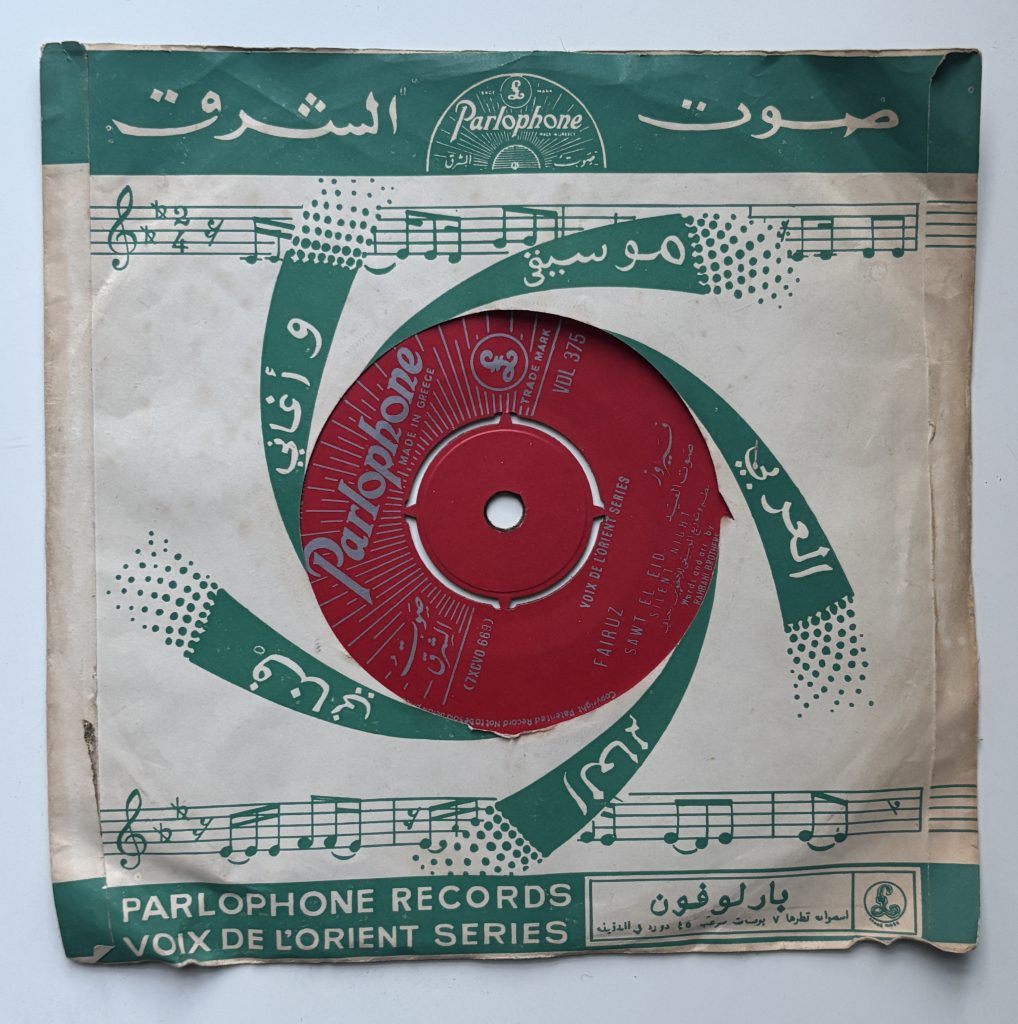
While my Dad was in intensive care, I played ‘Li Beirut’ and other music in the hospital. He has Alzheimers and it’s said that music and smell can connect to memory more directly or differently; when I play music there’s a flicker of a deeper recognition in a way that doesn’t register when just talking. He doesn’t know what day or time it is, but he remembers mountains in Lebanon and streets in Cairo. 

This was in Sept 2023, and he is now relatively more stable. Only a month later the genocide on Gaza started, and I/we all saw people in intensive care being hospitals being bombed, families that look like ours; and a year later the IOF invaded Lebanon again (Autumn 2024) where my extended family live, and aggressive attacks continue on both places relentlessly.  

There are many different types of grief; the anticipatory grief of watching a loved one slowly become ill, physically or mentally; or watching a place and its communities that you know being destroyed, which is also anticipatory: watching the news constantly, waiting for updates. Though this is nothing compared to the grief of those living through it directly. An indirect, mediated and/or diasporic grief, where the physical distance can leave a feeling of helplessness if you can’t be there or contribute materially. A grief or longing that’s also entangled with experiences of violence creates a complicated relationship. But it’s important to reiterate that there is more than suffering: there is agency, autonomy and liberation; but people are worn down by successive decades of invasions and bombing.  Here is one of the mutual aid groups in Lebanon that you could support: https://chuffed.org/project/184290-lebanon-urgent-relief-campaign

Image Descriptions:

  1. A colour photo of an old 7-inch vinyl record ‘Sawt El Eid’ by Fairuz in a paper record sleeve, which belonged to Teta. The record (the centre of which is visible through a cut out circle in the paper sleeve) is bright red with white writing which reads in English, Arabic and French: ‘Parlophone, Voices of the East Series, Fairuz, Silent Night’. The record sleeve design is green and white (which has yellowed with time), with a green stripe across the top and bottom with white text which reads in Arabic, French and English and translates (roughly) as: ‘The luxurious sound, Parlophone, Voices of the East Series’, and illustrations of a musical score in green. Around the central cut out circle are green patterns that swirl outwards, and translates (roughly) as ‘Arab music and songs’
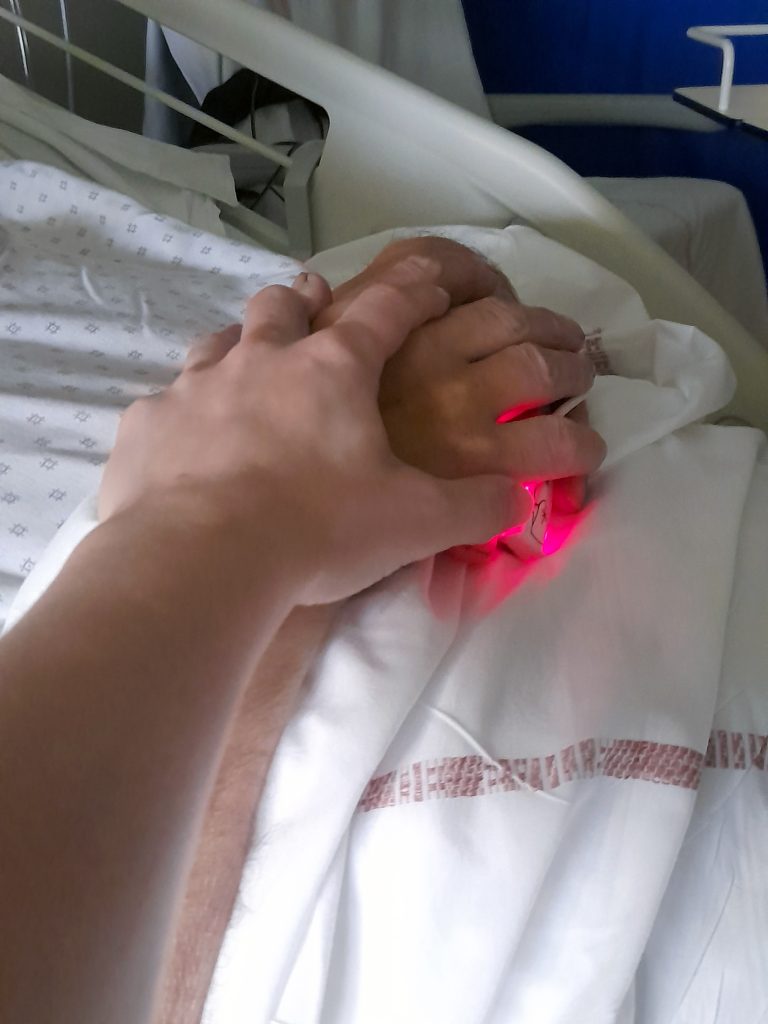
  2. A colour photo on a hospital ward, cropped to show two hands resting on top of each other in the foreground; the first hand underneath is a man (my Dad) who is lying in a hospital bed, wearing a white patterned hospital gown, and a white sheet up to his waist, and has an electronic device to measure his pulse attached to his forefinger which emits a bright pink light. My hand is reaching from outside of the hospital bed and resting on top of his. The background includes a white plastic hospital bed side rail, a white table and chair, a blue wall and wires.

Knots II

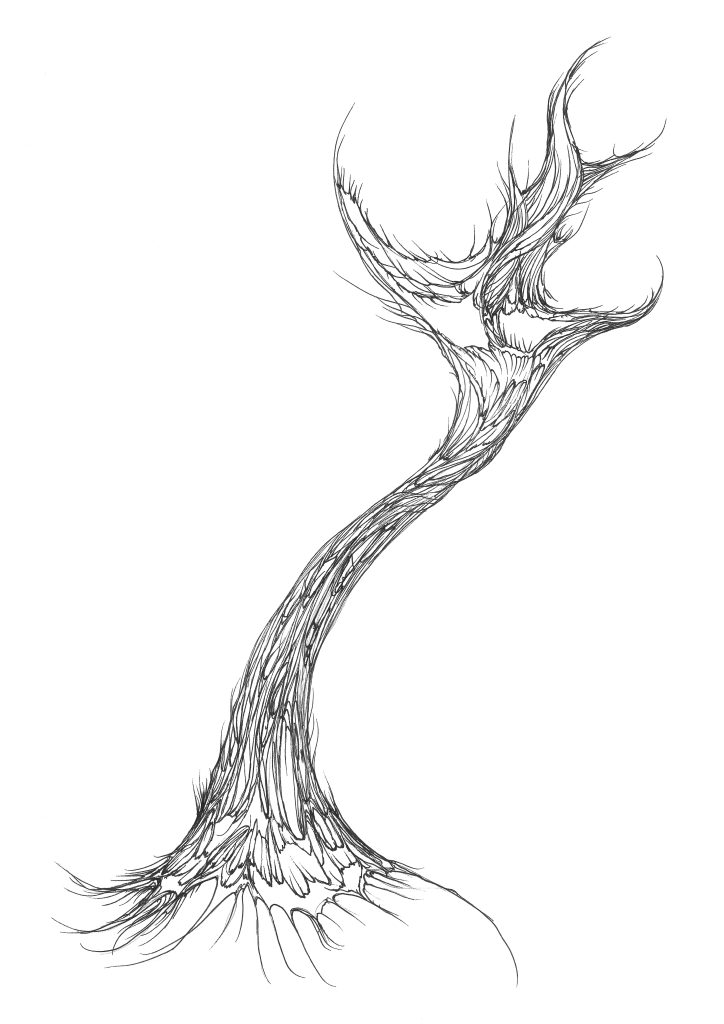
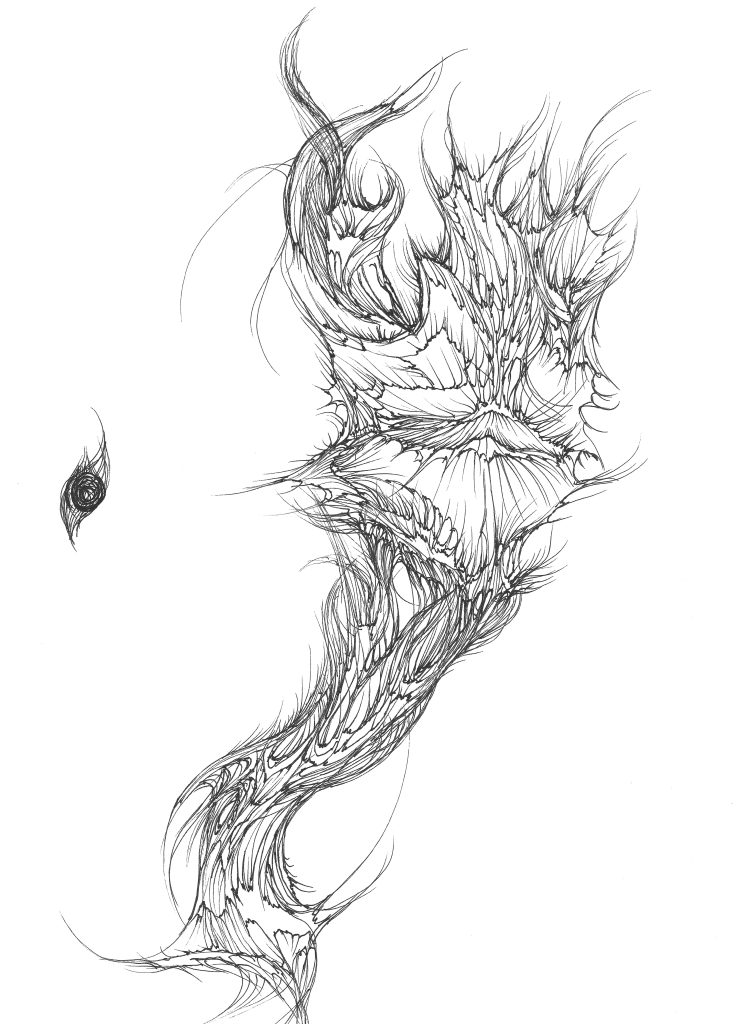
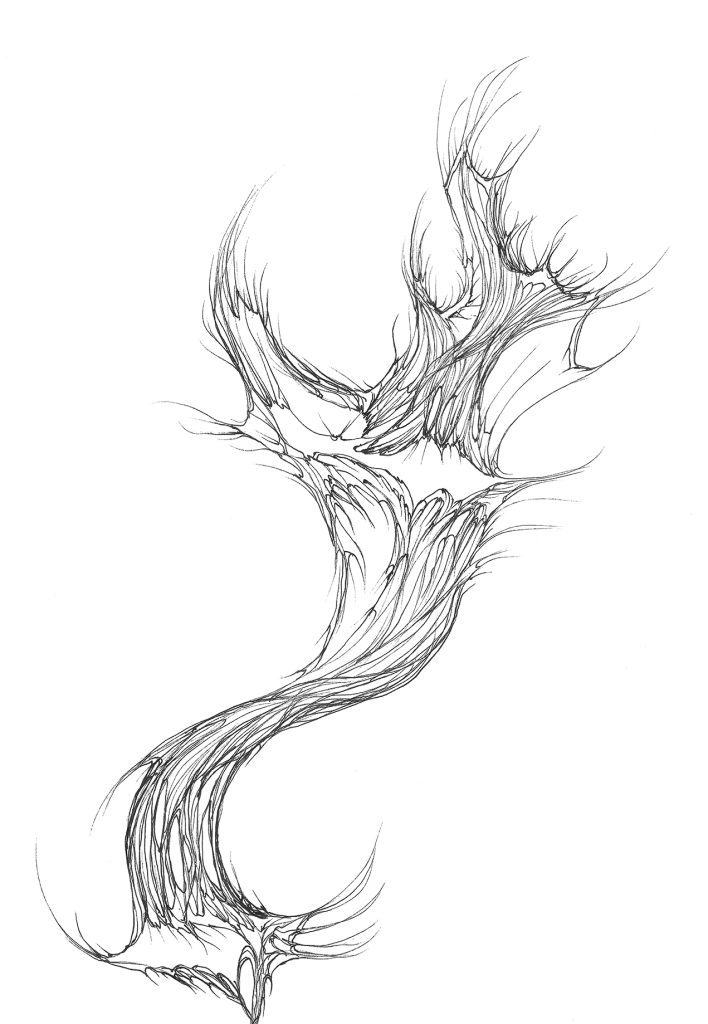
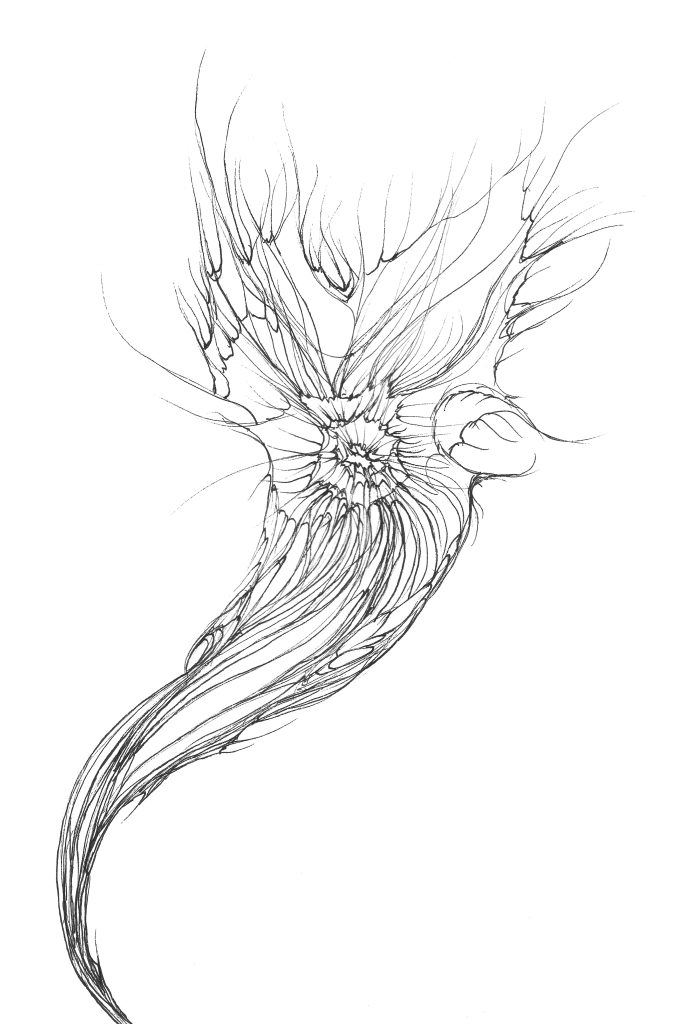
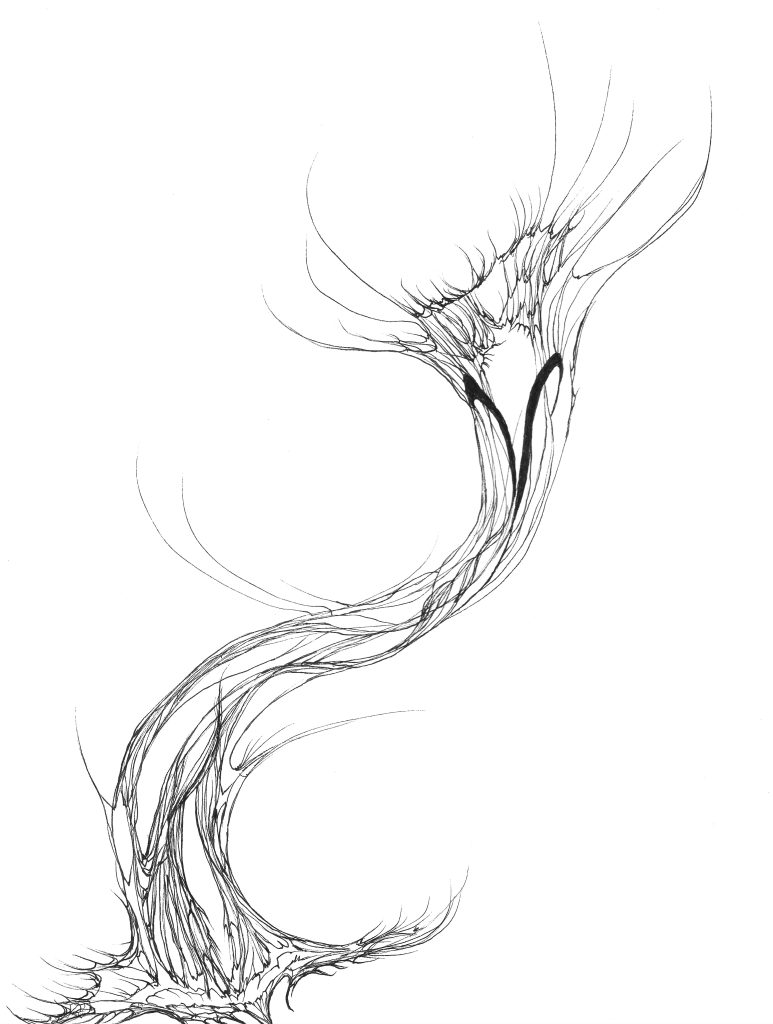
Image Description: Monochrome pen drawings with thin black lines on a white background. They look like abstracted versions of sinews, tendons, and neurons, twisting and curving. They follow a similar pattern of emerging from the bottom left corner of the page, winding around and up diagonally until the top right of the page. 

Knots (drawings)

(KNOTS) IMAGE DESCRIPTIONS: Three monochrome drawings with thin black sinuous lines on a white background. They look like abstracted versions of sinews, tendons, and neurons, twisting and curving. They follow a similar pattern of emerging from the bottom left corner of the page, winding around and up diagonally until they reach the top right of the page. 

In conversations about the residency, there was an emphasis on process rather than completion; I’ve started new medication this week, and as my body adjusts, my heart rate quickens and the neurotransmissions re-wire my brain, I have found that I’ve only been able to draw rather than make anything else. Drawing is always where I start in any creative process, even if it’s not related to the material I’m working on. Despite the conversations we’ve had on the residency about what we share here being ‘enough’, there are many internalised ableist assumptions about productivity, so it never really feels like it’s ‘enough’.

Welcome to my studio

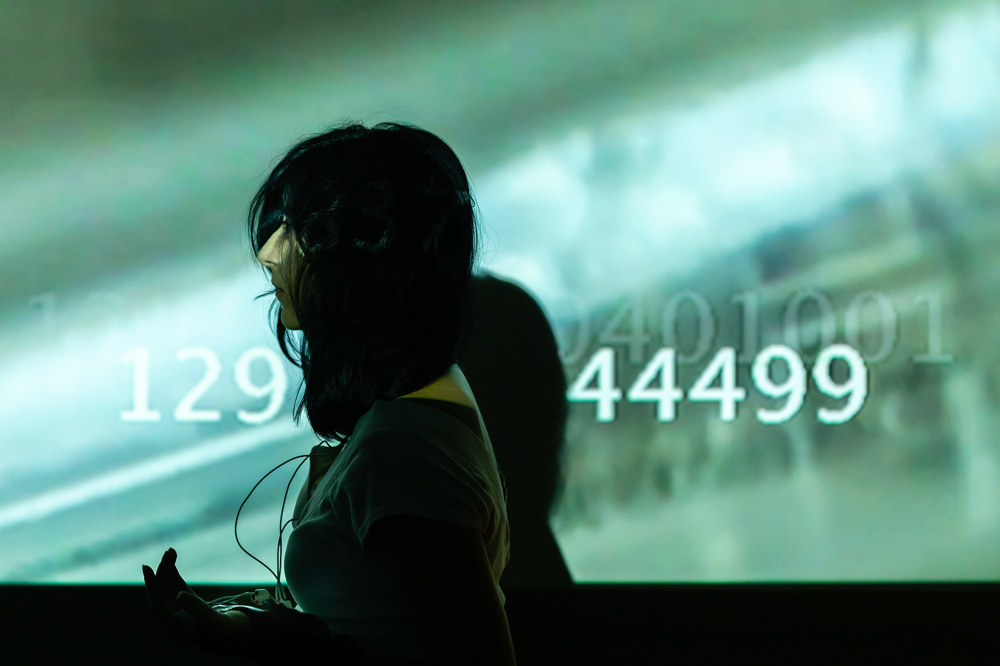
A performer with long dark hair stands in profile before a green-tinted projection displaying blurred imagery and large white numbers. Their face is partly obscured, and their shadow falls across the screen.
Chronica 2018 Performance at Jerwood – Photo by Hydar Dewach

Hello/أهلًا

This is my digital studio; I’m an artist and writer exploring personal experiences of being queer, non-binary, disabled and part of the SWANA (South-West Asian and North African) diaspora to wider forms of structural violence.

I’ve recently started a PhD and have been focusing on writing, so I’m looking forward to be able to have some dedicated studio time again, and to experiment with physical making alongside research. I hope to expand on the themes in my research on collective and intergenerational trauma, colonialism, speech, language and silence as resistance.

Feel free to get in touch with me via the comments.
Bye يلا باي