
 Accessing this site
 Display settings
 Artist login

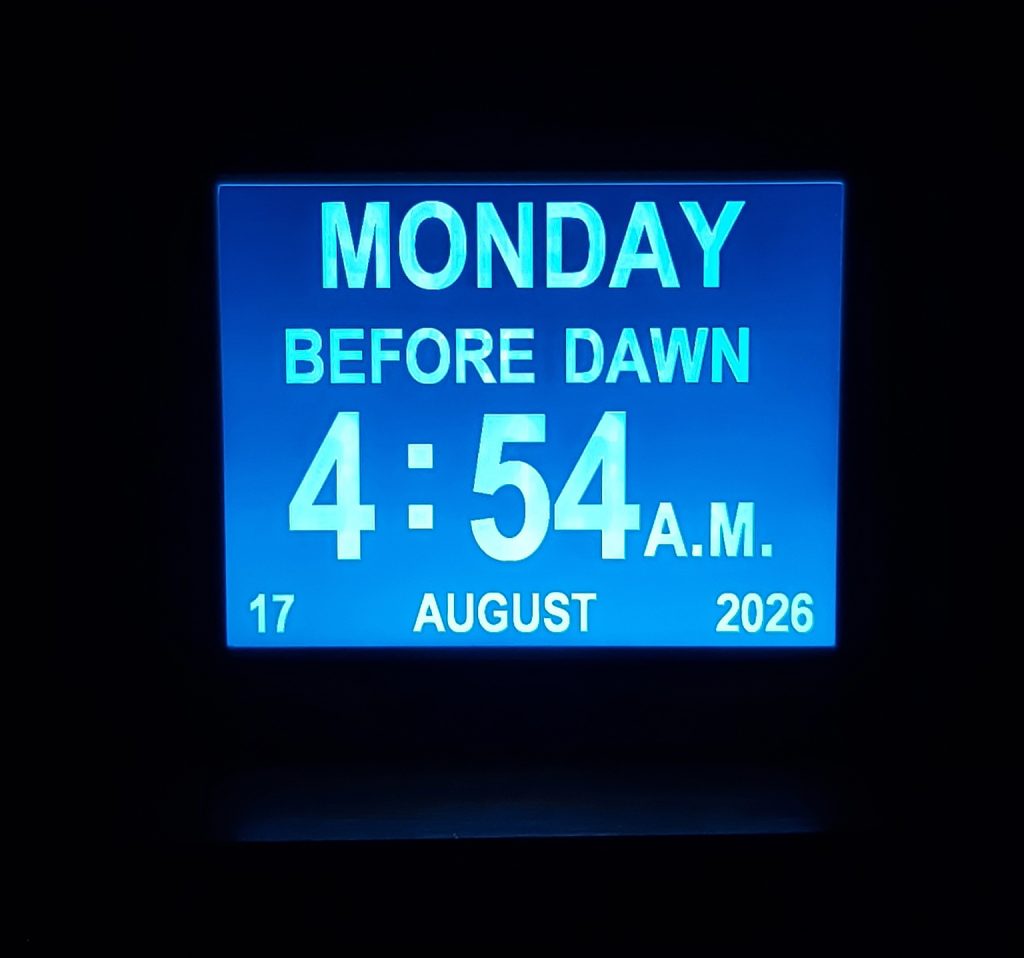
I am back at my mum’s. At first, I think I can’t continue with the residency process in this space: practices of art and care feel in direct tension. But then I start thinking about how conventional Western ideas of neoliberal productive time hold very little meaning here. I think about anti-disciplinary scholar Lisa Bradley’s article ‘Life without Clocks’ in which she tries and fails to ‘strange’ time by living without clocks for 12 days. For Lisa, the failure is not in removing the presence of clocks, rather it is in how the rhythm of time has ‘woven its threads through the fibers of my body long ago.’
Here, caring for my mum, time has not disappeared. It registers in the fading daylight, in ‘morning’ and ‘night’ pills, mealtimes, bin collections and the presence or absence of people passing. But ‘Monday morning’ and the productive week become absurd concepts. I have a vague memory of Friday night, but I’m no longer entirely convinced it exists. Instead, time gathers, circles, drags and folds into repetition, reassurance, waiting and attention. Rather than treating this as an interruption, I lean in.


